


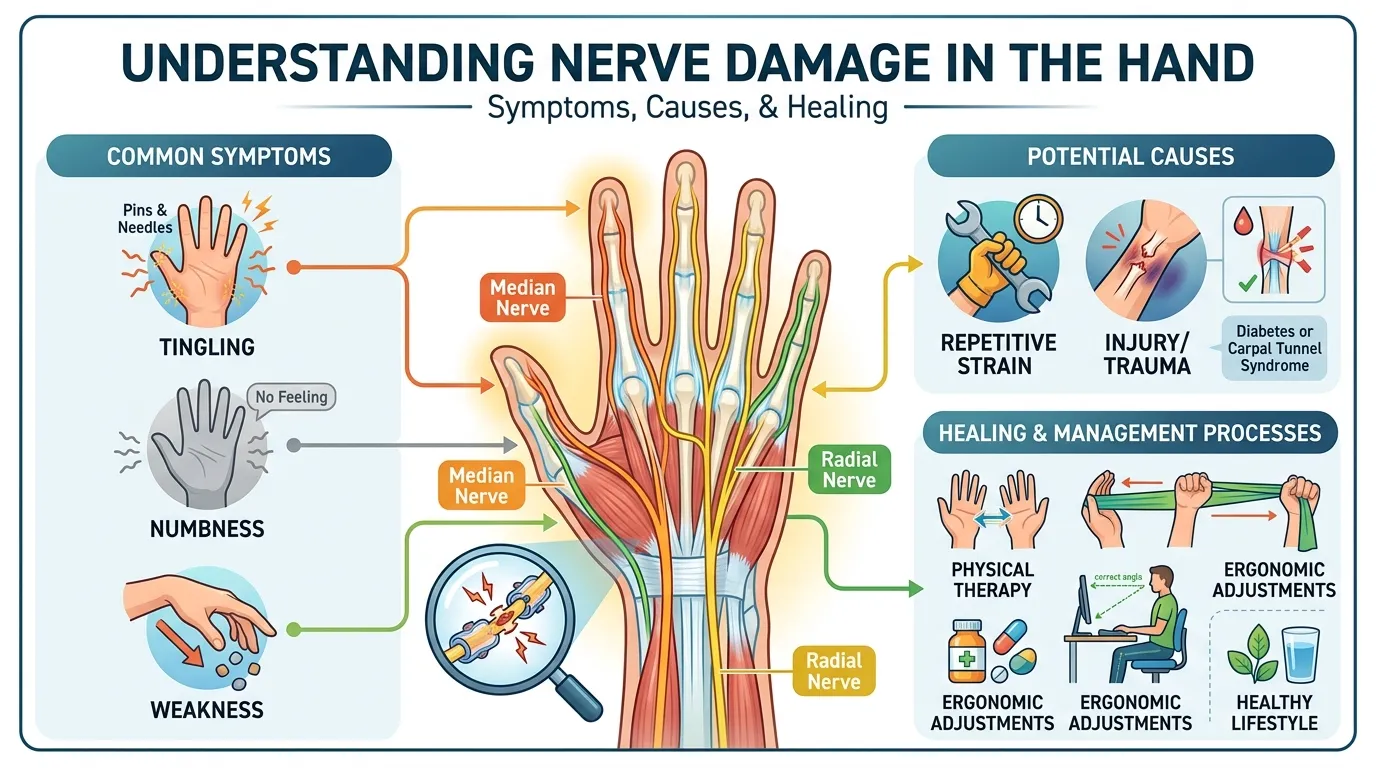
Nerve damage in the hand happens when the nerves that carry signals between your brain and hand become compressed, stretched, or injured. Common signs include tingling, numbness, weakness, and burning pain. Treatment ranges from rest and splinting to physical therapy, medication, and surgery, depending on the cause and severity.
Your hands do an incredible amount of work each day—typing, gripping, texting, cooking, and countless small movements you barely notice. All of that relies on a network of nerves running from your spine down to your fingertips. When one of those nerves gets pinched, stretched, or injured, the results can range from a mild tingle to serious pain and weakness.
Nerve damage in the hand is more common than many people realize, and it affects everyone from office workers to athletes to people managing chronic conditions like diabetes. The good news? Many cases improve with the right care, especially when caught early.
This guide breaks down the symptoms, causes, and treatments for nerve damage in the hand. You’ll learn how to recognize warning signs, understand what might be causing your discomfort, and explore both medical and natural approaches to recovery.
What are the symptoms of nerve damage in the hand?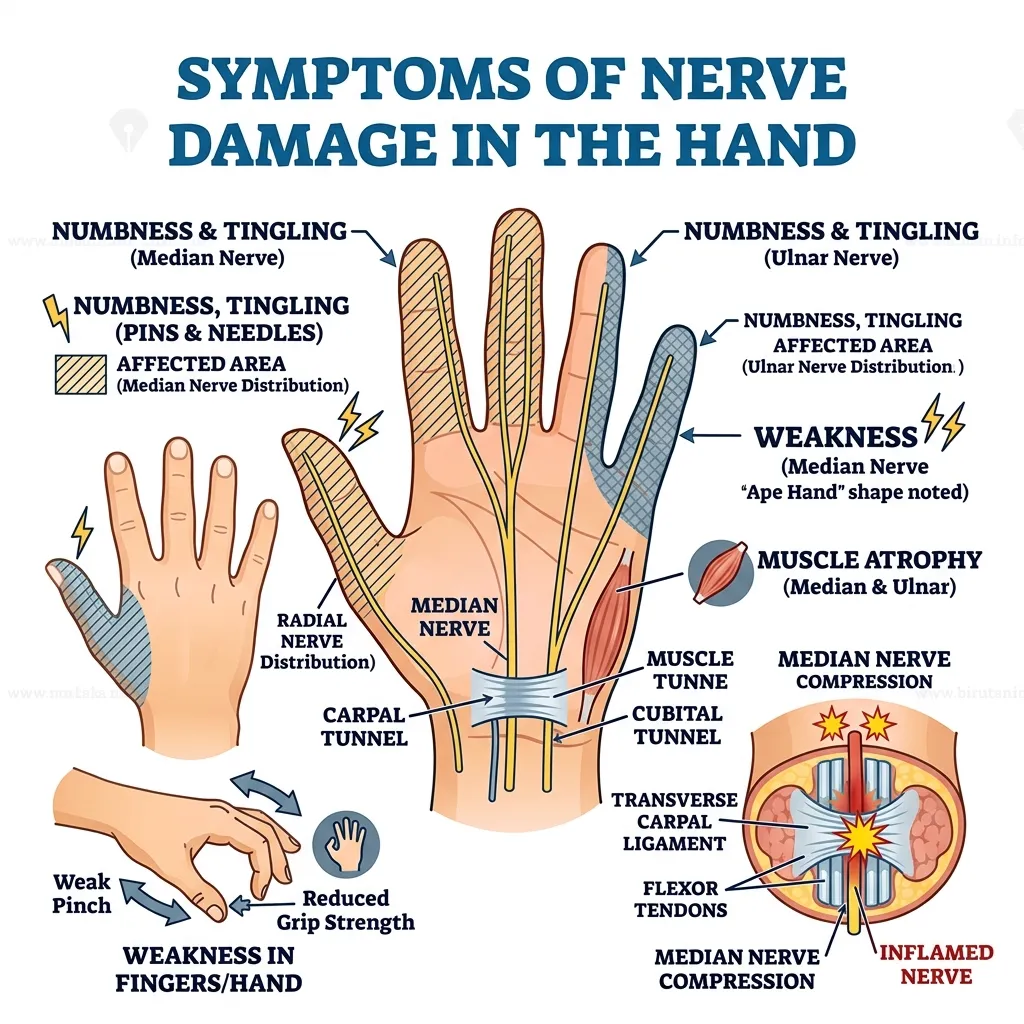
Hand nerve damage often starts subtly, then worsens over time. Recognizing the early signs can help you get treatment before the problem becomes permanent.
Common symptoms of nerve damage in the hand include:
- Tingling or “pins and needles” in the fingers or palm, often described as a buzzing or prickling feeling
- Numbness that may come and go or stay constant
- Burning or sharp pain that can radiate up the arm
- Weakness in the hand or fingers, making it hard to grip objects
- Loss of coordination or clumsiness, like dropping things more often
- Sensitivity to touch or temperature changes
- Muscle wasting in advanced cases, where part of the hand looks thinner
Many people first notice hand tingling and nerve problems at night, especially if they sleep with bent wrists. Symptoms that wake you from sleep are a strong sign that something needs attention.
What does median nerve damage feel like?
The median nerve runs through the wrist and controls feeling in the thumb, index finger, middle finger, and part of the ring finger. Median nerve damage symptoms typically include numbness or tingling in those specific fingers—but not the pinky.
People with median nerve problems often struggle with fine motor tasks like buttoning a shirt or holding a pen. This is the nerve affected in carpal tunnel syndrome, one of the most common nerve conditions in the hand.
What causes hand nerve injury?
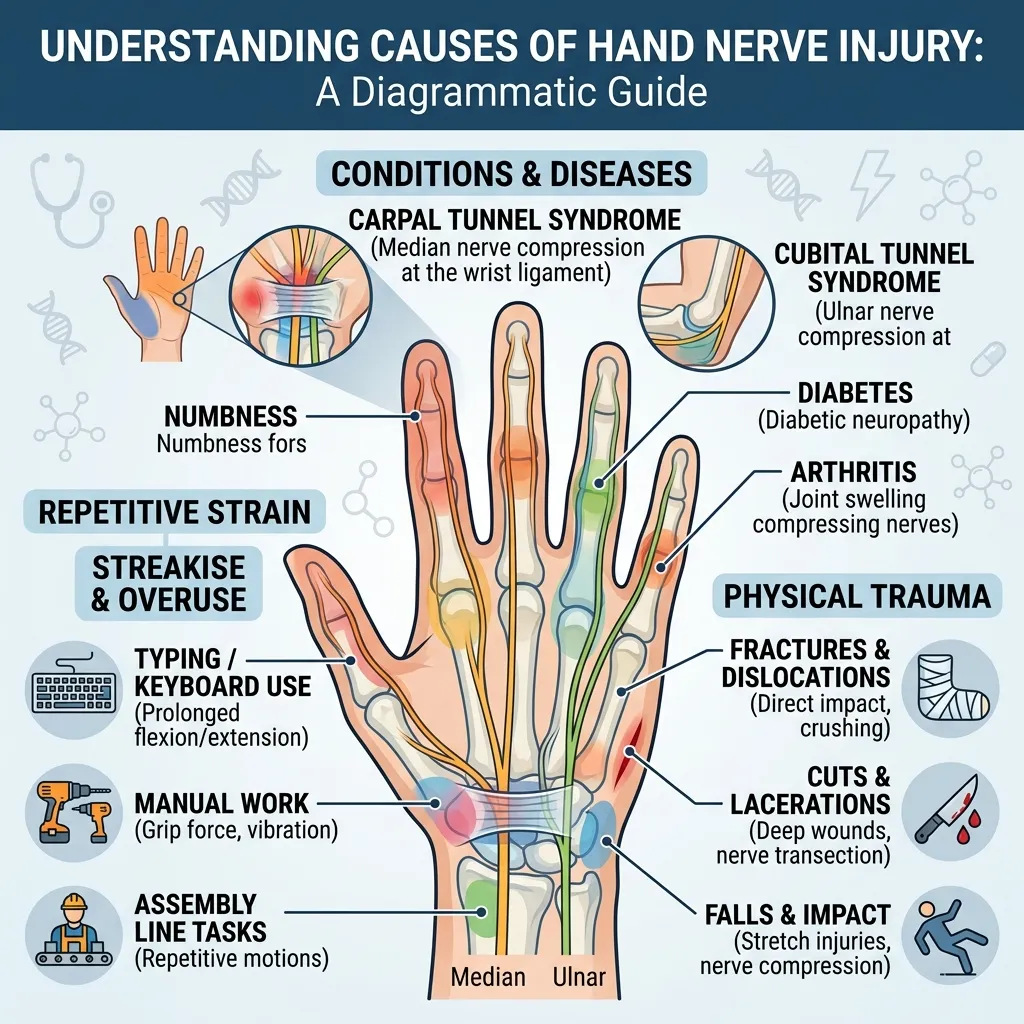
Understanding the cause of your symptoms is the first step toward effective treatment. Hand nerve injuries fall into a few broad categories.
Nerve compression
Nerve compression in the hand happens when surrounding tissue presses on a nerve, blocking its signals. Carpal tunnel syndrome is the best-known example, where the median nerve is squeezed at the wrist. Cubital tunnel syndrome affects the ulnar nerve near the elbow, often causing pinky and ring finger symptoms.
Nerve compression in hand symptoms usually develop gradually and may worsen with repetitive motions.
Trauma and injury
A direct blow, cut, fracture, or dislocation can stretch or sever a nerve. Sports injuries, car accidents, and workplace mishaps are frequent causes. Even a deep cut to the wrist or palm can damage the delicate nerves underneath.
Repetitive strain
Repeating the same hand movements for hours—typing, assembly line work, playing an instrument—can irritate and inflame nerves over time. This is a major reason nerve damage shows up in certain occupations.
Medical conditions
Several health conditions can cause peripheral nerve damage in the hand:
- Diabetes is a leading cause of peripheral neuropathy, which often affects the hands and feet
- Rheumatoid arthritis can cause swelling that compresses nerves
- Thyroid disorders may contribute to nerve issues
- Vitamin deficiencies, particularly B12, can harm nerve health
- Autoimmune diseases sometimes attack the nerves directly
What is peripheral nerve damage in the hand?
Peripheral nerve damage in the hand refers to injury to the nerves outside the brain and spinal cord. These peripheral nerves carry messages to and from your hands. When they’re damaged—by disease, injury, or pressure—the communication breaks down, leading to numbness, weakness, and pain.
Why do my hands tingle and go numb?
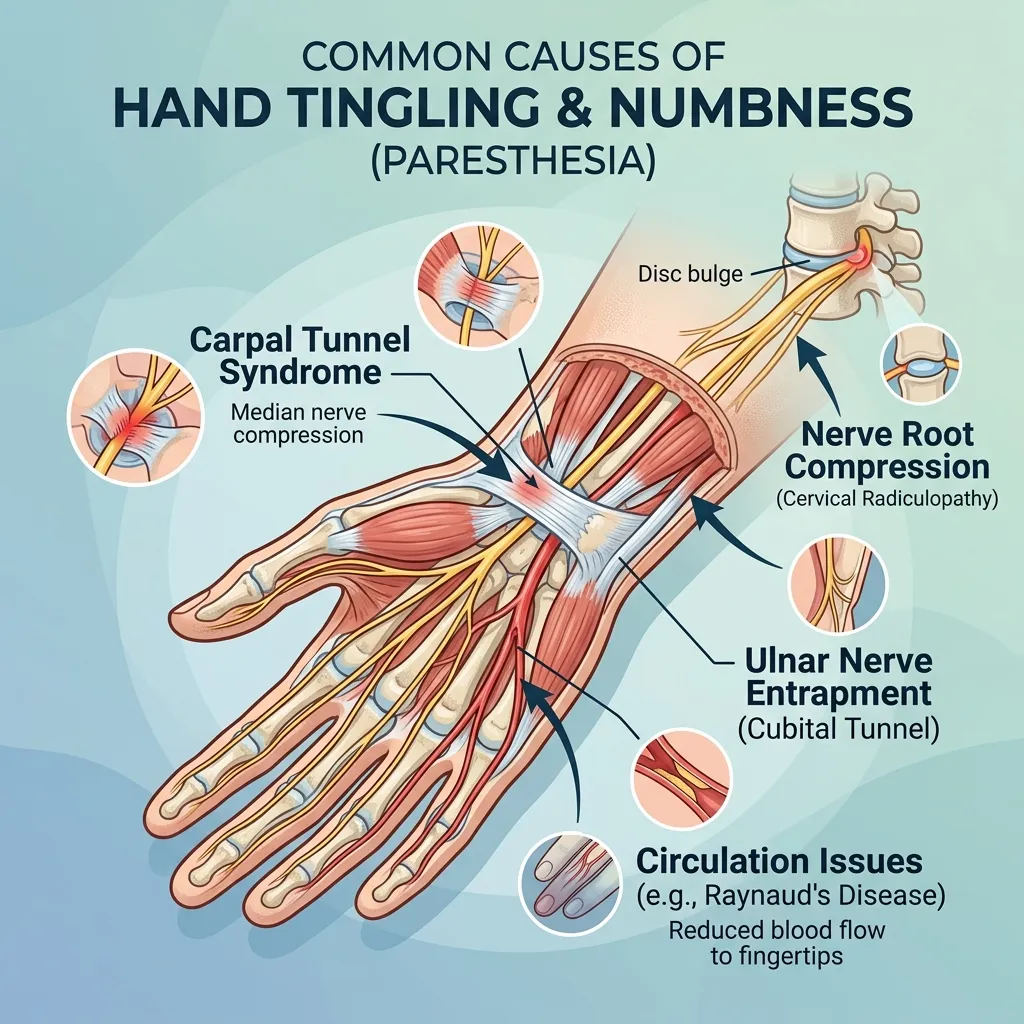
Hand nerve pain and numbness are two of the most common complaints people bring to their doctors. The combination usually points to a nerve that isn’t transmitting signals properly.
Temporary numbness—like when your hand “falls asleep” after leaning on it—is normal and harmless. But persistent or recurring numbness deserves attention. If you regularly experience hand tingling and nerve problems, it may signal an underlying issue like nerve compression, neuropathy, or an injury that hasn’t healed.
Pay attention to patterns. Numbness in specific fingers can point to which nerve is involved. As a general guide:
- Thumb, index, and middle finger: median nerve
- Pinky and half the ring finger: ulnar nerve
- Back of the hand and thumb: radial nerve
How is nerve damage in the hand treated?
Treatment for nerve damage in the fingers and hand depends on the cause, severity, and how long symptoms have lasted. Most doctors start with conservative options before considering surgery.
Rest and activity changes
Giving the affected nerve a break is often the first step. This might mean taking frequent breaks from typing, adjusting your workstation, or avoiding the movements that trigger symptoms.
Splints and braces
Wrist splints keep the joint in a neutral position, reducing pressure on compressed nerves. Many people wear them at night to prevent the bent-wrist position that aggravates carpal tunnel.
Physical therapy
A therapist can guide you through exercises that strengthen the hand, improve flexibility, and reduce nerve irritation. Nerve gliding exercises, which gently move the nerve through its natural path, can be especially helpful.
Medication
Over-the-counter anti-inflammatories may ease mild pain and swelling. For more severe nerve pain, doctors sometimes prescribe medications designed to calm overactive nerves. Corticosteroid injections can reduce inflammation around a compressed nerve.
Surgery
When conservative treatments don’t work, or when a nerve is severely compressed or cut, surgery may be necessary. Carpal tunnel release, for example, relieves pressure on the median nerve. Surgical repair can reconnect a severed nerve, though recovery takes time.
How to heal nerve damage in the hand
Healing nerve damage takes patience. Nerves repair themselves slowly—often about an inch per month—so recovery can stretch over weeks or months. Still, there’s plenty you can do to support the process.
Here’s how to heal nerve damage in the hand and give your body the best chance to recover:
- Address the root cause. If repetitive strain is the issue, change your habits. If diabetes is involved, work with your doctor to manage blood sugar.
- Stay consistent with therapy. Doing your prescribed exercises regularly matters more than doing them intensely once in a while.
- Protect the hand. Avoid re-injuring the area while it heals.
- Eat for nerve health. A diet rich in B vitamins, omega-3 fatty acids, and antioxidants supports nerve repair.
- Manage underlying conditions. Keeping conditions like diabetes and thyroid disorders under control protects your nerves long-term.
Early treatment leads to the best outcomes. The longer a nerve stays compressed or damaged, the harder it can be to fully recover.
What are natural remedies for hand nerve pain?
Alongside medical treatment, several natural approaches may help ease hand nerve pain and support recovery. These work best as a complement to professional care, not a replacement.
- Warm and cold compresses can reduce inflammation and soothe discomfort. Alternating between the two often brings relief.
- Gentle stretching and yoga improve circulation and reduce nerve tension.
- B vitamins, especially B12, support nerve function. Talk to your doctor about whether a supplement makes sense for you.
- Turmeric contains curcumin, which has anti-inflammatory properties that some people find helpful.
- Magnesium may help with nerve and muscle function.
- Acupuncture has shown promise for some types of nerve pain.
- Quality sleep and stress management give your body the resources it needs to heal.
Always check with a healthcare provider before starting supplements, especially if you take other medications or have existing health conditions.
When should you see a doctor?
Some hand nerve symptoms warrant prompt medical attention. See a doctor if you experience:
- Numbness or weakness that doesn’t go away
- Symptoms that interfere with daily activities or sleep
- Pain that gets worse over time
- Sudden loss of hand function after an injury
- Signs of muscle wasting
Catching nerve damage early gives you far more treatment options and a better shot at full recovery. Don’t wait for symptoms to become severe.
Taking the next step toward recovery
Nerve damage in the hand can be frustrating, but it’s often treatable—especially when you act early. Start by paying attention to your symptoms and patterns. Note which fingers feel numb, when the pain strikes, and what activities make it worse. This information helps your doctor pinpoint the cause faster.
If your symptoms persist for more than a week or two, book an appointment with a healthcare provider or hand specialist. They can run tests, identify the underlying cause, and build a treatment plan suited to your situation. In the meantime, rest the affected hand, adjust your daily habits, and consider gentle, supportive remedies.
Your hands are too important to ignore. With the right care and a little patience, many people make a full recovery from nerve damage in the hand.
Frequently asked questions
Can nerve damage in the hand heal on its own?
Mild nerve damage, especially from temporary compression or minor strain, can heal on its own with rest and activity changes. However, more serious damage—from injury, chronic compression, or disease—usually needs medical treatment. Nerves heal slowly, often about an inch per month, so recovery takes patience.
How long does it take to recover from hand nerve damage?
Recovery time varies widely. Minor cases may improve in a few weeks, while serious nerve injuries can take several months to a year or more. The timeline depends on the cause, severity, your overall health, and how quickly you start treatment.
What is the difference between nerve compression and nerve damage?
Nerve compression happens when tissue presses on a nerve, interrupting its signals—this is often reversible if treated early. Nerve damage is broader and includes injury to the nerve itself from trauma, disease, or long-term compression. Untreated compression can eventually lead to lasting nerve damage.
Is nerve damage in the hand permanent?
Not always. Many cases improve with treatment, particularly when addressed early. However, severe or long-untreated nerve damage can cause permanent numbness, weakness, or loss of function. This is why prompt evaluation matters so much.
Can vitamin deficiencies cause hand nerve problems?
Yes. Deficiencies in certain nutrients, especially vitamin B12, can harm nerve health and contribute to numbness and tingling. A blood test can check for deficiencies, and correcting them may improve symptoms. Always consult a doctor before starting supplements.
What is nerve damage in the hand?
Nerve damage in the hand refers to injury or dysfunction in the nerves that control sensation and movement in the hand and fingers.
What are the early symptoms of nerve damage in the hand?
Early signs include tingling, numbness, burning pain, weakness, and loss of grip strength.
What causes nerve damage in the hand?
Common causes include nerve compression, repetitive strain, injuries, diabetes, and vitamin deficiencies.
Can nerve damage in the hand heal?
Yes, mild cases of nerve damage in the hand can heal with rest and treatment, but severe cases may take longer or require medical intervention.
How is nerve damage in the hand diagnosed?
Doctors may use physical exams, nerve conduction tests, and imaging to identify the cause and severity.
What is the most common nerve condition in the hand?
Carpal tunnel syndrome is the most common condition affecting the median nerve in the wrist and hand.
How long does it take to recover from nerve damage in the hand?
Recovery can take weeks to several months depending on severity and treatment.
Can vitamin deficiencies cause nerve damage in the hand?
Yes, especially vitamin B12 deficiency, which can lead to nerve-related symptoms like numbness and tingling.
What treatments help nerve damage in the hand?
Treatments include rest, splints, physical therapy, medication, and in severe cases, surgery.
When should I see a doctor for nerve damage in the hand?
You should see a doctor if symptoms persist, worsen, or interfere with daily activities or sleep
