
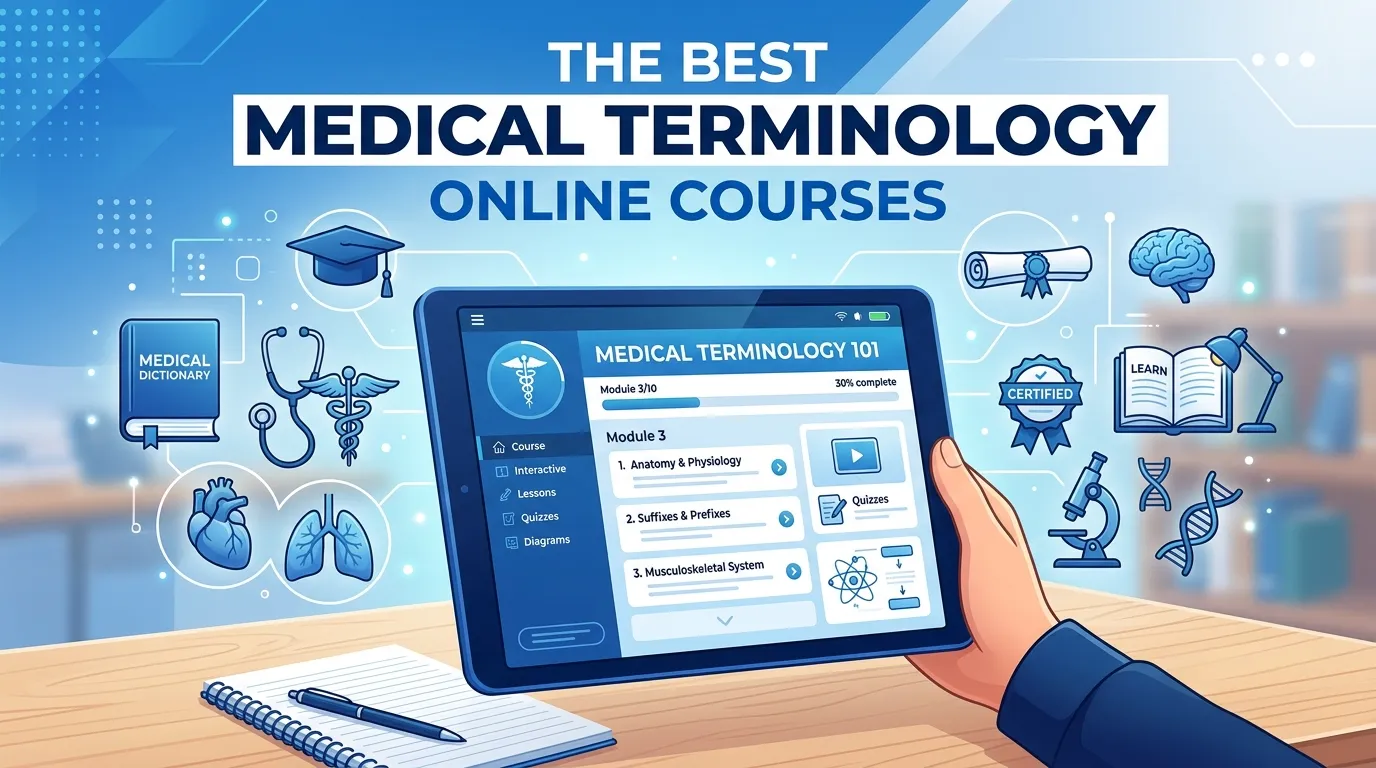
A medical terminology online course helps you learn the language of healthcare, including medical vocabulary, anatomy, and clinical terms. Whether you’re starting a healthcare career or building new skills, the right course can improve communication, support certification, and prepare you for a variety of medical roles.
Medical terminology online courses teach the language of healthcare—from anatomy roots to clinical abbreviations. Top options range from self-paced platforms like Coursera and edX to accredited programs through community colleges. The best course for you depends on your career goals, budget, and whether you need a recognized certification.
Healthcare moves fast. Whether you’re entering the field for the first time or advancing within it, one skill separates those who can keep up from those who can’t: the ability to speak the language. Medical terminology is that language—and learning it online has never been more accessible, affordable, or career-relevant.
This guide breaks down everything you need to know about medical terminology online courses: what they cover, how to find accredited options, which platforms are worth your time, and how to choose the right course for your specific goals. By the end, you’ll have a clear picture of what to look for—and where to start.
What Is Medical Terminology, and Why Does It Matter?
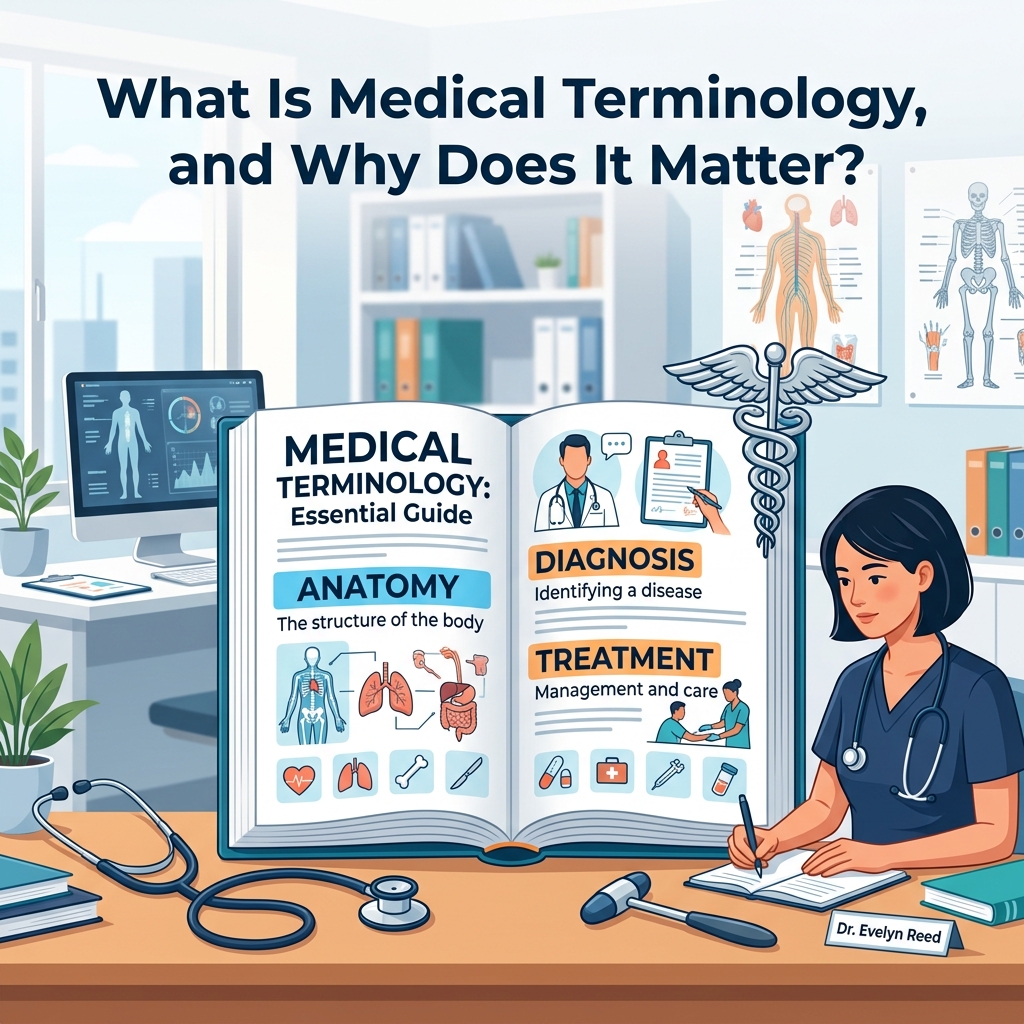
Medical terminology is the standardized language used by healthcare professionals to describe the human body, its functions, conditions, procedures, and equipment. Rooted largely in Latin and Greek, it provides a universal shorthand that allows doctors, nurses, coders, administrators, and allied health workers to communicate precisely and efficiently.
Getting this language wrong isn’t just an inconvenience—it can have real consequences. A misread abbreviation or a misunderstood diagnosis code can delay treatment or contribute to billing errors. That’s why medical terminology training is considered a foundational requirement across virtually every healthcare role, from clinical to administrative.
For professionals already working in healthcare, a medical terminology course sharpens daily communication and reduces costly errors. For those entering the field—aspiring medical coders, health information technicians, or patient care assistants—it provides the essential groundwork that most employers and certification bodies expect.
What Do Online Medical Terminology Classes Actually Cover?
The depth of a medical terminology course varies by provider and level, but most reputable programs share a common core curriculum.
Core topics in most medical terminology training courses
- Word structure: Prefixes, suffixes, and root words that form the building blocks of medical language (e.g., cardio- for heart, -itis for inflammation)
- Body systems: Terminology specific to the cardiovascular, respiratory, musculoskeletal, neurological, gastrointestinal, and other systems
- Anatomy and physiology basics: Many anatomy and medical terminology courses integrate foundational anatomical knowledge to give terminology real-world context
- Clinical abbreviations: Commonly used shorthand in charts, prescriptions, and clinical notes
- Diagnostic and procedural terms: Language used to describe tests, surgeries, and treatment plans
- Medical coding terminology: Terminology used in ICD-10 and CPT coding frameworks, essential for billing and coding roles
More advanced courses—particularly those focused on medical coding terminology training—go deeper into coding systems, insurance documentation, and compliance vocabulary.
Self-Paced vs. Structured: Which Format Works Best?
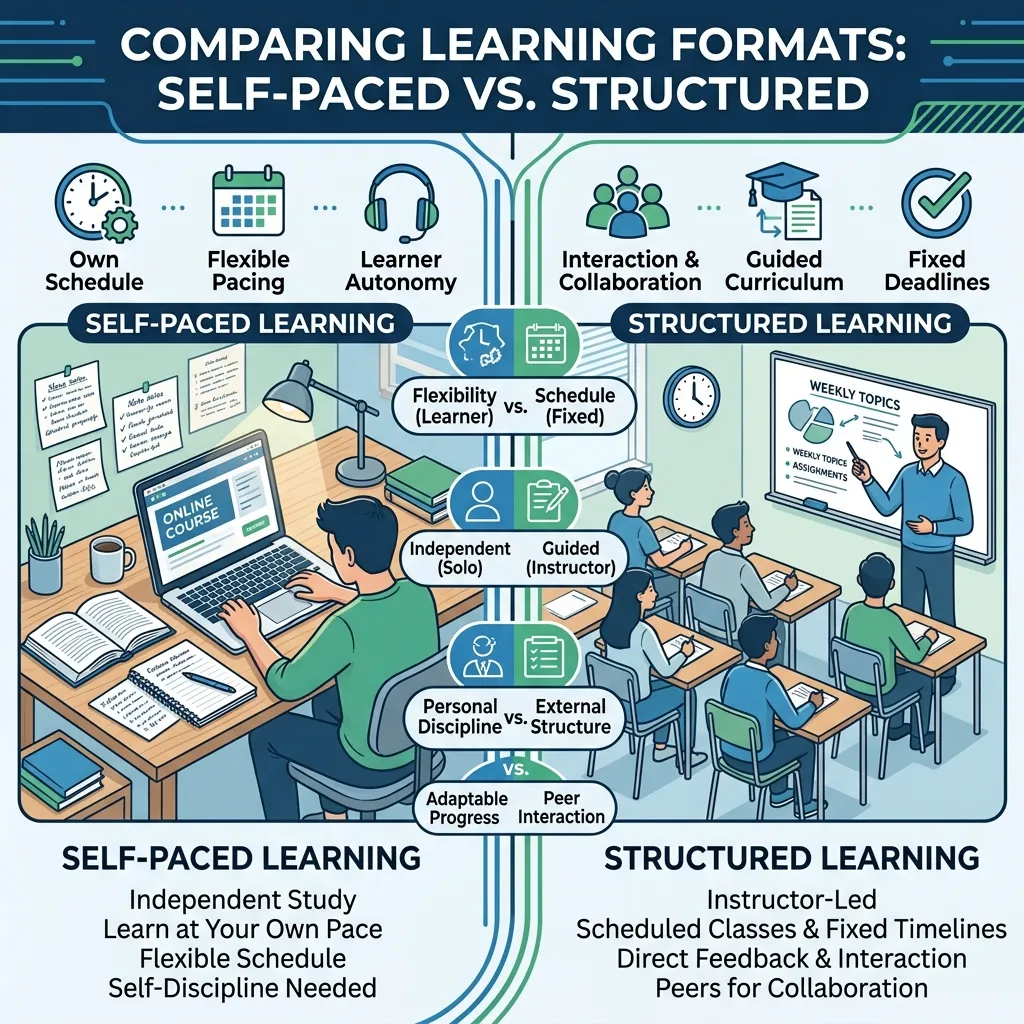
One of the biggest decisions you’ll make when selecting a course is the format. Online medical terminology classes generally fall into two categories.
Self-paced medical terminology courses
Self-paced programs let you move through material on your own schedule. Platforms like Coursera, edX, and Alison host self-paced medical terminology courses that can be completed in as few as a few weeks or stretched over several months. This format suits working professionals, caregivers, and students managing other commitments.
The trade-off is accountability. Without set deadlines, some learners lose momentum. If you’re the type who thrives with structure, a self-paced course may require more discipline than expected.
Instructor-led online courses
Community colleges and universities often offer instructor-led online courses with fixed start dates, weekly assignments, and direct access to faculty. These tend to be more rigorous and carry greater academic weight—important if you’re pursuing an accredited medical terminology certification.
Choose self-paced if flexibility is your priority and you’re self-motivated. Choose instructor-led if you want structured feedback, peer interaction, or a credential tied to an accredited institution.
Where to Find Accredited Medical Terminology Courses Online
Not all certificates carry the same weight. If your goal is career advancement or meeting prerequisites for a certification exam, an accredited medical terminology course matters.
What accreditation means for healthcare terminology courses
Accreditation signals that a program meets established academic or professional standards. For medical terminology, relevant accrediting bodies include:
- CAHIIM (Commission on Accreditation for Health Informatics and Information Management Education) — relevant for health information management programs
- Regional accreditors (e.g., HLC, SACSCOC) — apply to community colleges and universities offering credit-bearing courses
- AHIMA (American Health Information Management Association) — offers its own approved education resources, particularly relevant for medical coding terminology training
Programs affiliated with these bodies are generally recognized by employers and professional certification organizations. Always verify accreditation directly on the provider’s website before enrolling.
Top platforms offering online medical terminology classes
Coursera partners with universities like UC San Diego and Duke to offer healthcare vocabulary courses online. Many programs are auditable for free, with paid certificates available.
edX features courses from institutions including Harvard Medical School’s affiliated programs, covering medical vocabulary and anatomy-based terminology.
Alison offers free, self-paced medical terminology training courses at introductory and intermediate levels, making it a solid entry point for those testing the waters.
Community colleges (e.g., Penn Foster, Ashworth College, and many state institutions) provide credit-bearing, instructor-led healthcare terminology courses that feed into degree programs or professional certifications.
AHIMA’s online education portal is particularly useful for those pursuing careers in health information management or medical coding.
Medical Terminology for Healthcare Professionals: Role-Specific Considerations
The right course depends heavily on what you’re going to do with the knowledge. Medical terminology for healthcare professionals isn’t a one-size-fits-all subject.
Medical coders and billing specialists
For this group, medical coding terminology training is the priority. Look for courses that integrate ICD-10-CM, CPT, and HCPCS Level II terminology alongside foundational medical vocabulary. Programs affiliated with AHIMA or AAPC (American Academy of Professional Coders) carry particular weight in this field.
Nursing and allied health students
An anatomy and medical terminology course offers the most value here. Understanding terminology in the context of body systems—rather than in isolation—makes it easier to retain and apply in clinical settings.
Healthcare administrators and front-office staff
A general healthcare terminology course focused on clinical documentation, patient records, and common abbreviations is usually sufficient. The goal is functional fluency, not clinical depth.
Those entering health information management
A comprehensive medical terminology certification online, ideally from an accredited program, prepares candidates for credentials like the RHIT (Registered Health Information Technician) exam.
How Long Does It Take to Complete a Medical Terminology Course Online?
Course length varies significantly by format and depth.
- Short introductory courses: 10–20 hours of content, completable in 1–3 weeks at a self-paced rate
- Standard online medical terminology classes: 30–60 hours, typically 4–8 weeks with consistent study
- Full credit-bearing courses: Equivalent to a college semester (15–16 weeks), often 3 credit hours
Most healthcare employers and certification bodies don’t specify a minimum course length, but they do value demonstrated proficiency. A certificate from a recognized institution generally carries more weight than one from an unaccredited platform, regardless of how quickly it was earned.
What to Look for When Comparing Medical Terminology Training Courses
With dozens of options available, narrowing the field requires a clear set of criteria.
Accreditation status — Does the issuing institution hold regional or professional accreditation? Is the program recognized by relevant bodies like AHIMA or AAPC?
Curriculum depth — Does the course cover your target specialty (e.g., coding, anatomy, clinical administration)? Review the syllabus before committing.
Instructor credentials — Are instructors credentialed health information professionals, certified coders, or medical educators?
Student outcomes — Does the provider share pass rates, employer placement data, or learner reviews?
Cost and certificate value — Free courses are great for foundational knowledge, but if you need a credential for job applications or further study, a paid accredited course is usually worth the investment.
Technical support and accessibility — Especially relevant for self-paced medical terminology courses: is the platform mobile-friendly? Are there practice quizzes and interactive tools?
Frequently Asked Questions
Is an online medical terminology certification recognized by employers?
Yes, provided it comes from an accredited institution or a recognized professional organization. Certificates from AHIMA-affiliated programs, regionally accredited community colleges, or established platforms like Coursera (through university partners) are widely accepted. Certificates from unaccredited platforms may carry less weight for formal job applications.
Do I need prior healthcare experience to take a medical terminology course online?
No prior experience is required for most introductory courses. Medical terminology training courses are designed to build vocabulary from the ground up. Some advanced programs—particularly anatomy and medical terminology courses—may recommend basic biology knowledge, but this is rarely a hard prerequisite.
How much does a medical terminology certification online cost?
Costs range from free (Alison, some Coursera audit tracks) to $150–$500 for self-paced programs on platforms like Penn Foster, to $800–$2,000+ for full credit-bearing courses at accredited colleges. The price generally reflects the depth of the program and the weight of the resulting credential.
What is the difference between a medical terminology course and a medical coding course?
A medical terminology course focuses on the language of healthcare—understanding and using clinical vocabulary correctly. A medical coding course teaches how to assign standardized codes (ICD-10, CPT) to diagnoses and procedures. Most medical coding programs require completion of a healthcare terminology course as a prerequisite, since coding fluency depends on a solid grasp of medical vocabulary.
Can a medical terminology online course count toward a degree?
Some can. Credit-bearing medical terminology courses offered through accredited community colleges or universities may transfer to associate or bachelor’s degree programs in health information management, nursing, or allied health. Always confirm transferability with your target institution before enrolling.
Is a self-paced medical terminology course as rigorous as a traditional class?
It can be, depending on the provider. Self-paced courses from accredited institutions cover the same material as instructor-led versions—the key difference is structure and accountability. Some learners find self-paced formats more efficient; others benefit from the added support of instructor feedback and peer discussion.
What is a medical terminology online course?
A medical terminology online course teaches the language of healthcare, including medical terms, anatomy, physiology, abbreviations, and clinical vocabulary used by healthcare professionals.
Who should take a medical terminology online course?
These courses are ideal for aspiring healthcare professionals, medical coders, nurses, allied health students, healthcare administrators, and anyone entering the medical field.
Are online medical terminology courses accredited?
Many are accredited through colleges, universities, or recognized healthcare organizations. Always verify accreditation before enrolling if you need a recognized credential.
How long does it take to complete a medical terminology course online?
Most self-paced courses take between 2 and 8 weeks, while college-level, credit-bearing courses may last an entire semester.
Can I earn a certificate from a medical terminology online course?
Yes. Many providers offer certificates of completion, and accredited institutions may award recognized certifications that employers value.
Do I need prior medical experience to enroll?
No. Most beginner medical terminology courses require no previous healthcare experience and are designed for new learners.
What topics are covered in a medical terminology course?
Courses typically cover medical prefixes and suffixes, anatomy, body systems, clinical abbreviations, diagnostic terms, and healthcare documentation.
What is the difference between a medical terminology course and a medical coding course?
Medical terminology courses focus on healthcare vocabulary, while medical coding courses teach coding systems like ICD-10 and CPT used for billing and insurance.
How much does a medical terminology online course cost?
Costs range from free introductory courses to several hundred dollars for accredited programs that include certification.
Is a medical terminology online course worth it?
Yes. Learning medical terminology improves communication, enhances career opportunities, supports healthcare certifications, and provides a strong foundation for many medical professions.
Ready to Start? Here’s How to Choose Your Course
Medical terminology is one of the most transferable skills in healthcare. It opens doors across clinical, administrative, and technical roles—and a strong foundation makes every subsequent step in your healthcare career easier.
Start by identifying your goal. Do you need a recognized credential for a job application? Prioritize an accredited medical terminology certification online. Exploring the field before committing to a full program? A free self-paced course on Coursera or Alison is a low-risk starting point. Already working in healthcare and aiming for a coding role? Look for medical coding terminology training through AHIMA or AAPC’s approved education pathways.
The best course is the one that matches where you’re going—not just where you are. Take the time to compare curricula, verify accreditation, and read learner reviews before enrolling. Your investment in the right medical terminology training course now will pay dividends throughout your healthcare career.
