

Knowing how to calm your nervous system can reduce stress, improve sleep, and strengthen emotional resilience. Simple techniques like deep breathing, vagus nerve stimulation, mindfulness, movement, and quality sleep help activate your body’s natural relaxation response and support long-term nervous system health.
To calm your nervous system, activate the parasympathetic nervous system through techniques like diaphragmatic breathing, vagus nerve stimulation, cold water exposure, and mindfulness. These evidence-backed methods reduce cortisol, lower heart rate, and shift your body out of fight-or-flight mode—often within minutes.
You’re not imagining it. That tight chest, the racing thoughts at 2 a.m., the hair-trigger startle response—these aren’t personality quirks. They’re signs that your nervous system is stuck in overdrive.
Chronic stress keeps millions of people locked in a low-grade state of physiological alarm. According to the American Psychological Association (APA, 2023), 76% of American adults report at least one stress-related physical symptom in a given month. The body’s stress response was designed for short bursts—sprint from the predator, then recover. But modern stressors don’t disappear. Work pressure, financial anxiety, and constant digital stimulation keep the threat signals running in the background, day after day.
The good news? Nervous system regulation is a skill. The body has its own built-in brake system—the parasympathetic nervous system—and you can learn to activate it deliberately. This guide covers exactly how to do that, from vagus nerve stimulation to somatic movement, cold exposure, and beyond.
Whether you’re recovering from burnout, managing anxiety, or simply trying to sleep better, these techniques offer a practical, evidence-backed path toward a calmer, more regulated nervous system.
Understanding Nervous System Regulation
Before diving into techniques, it helps to understand what you’re actually working with.
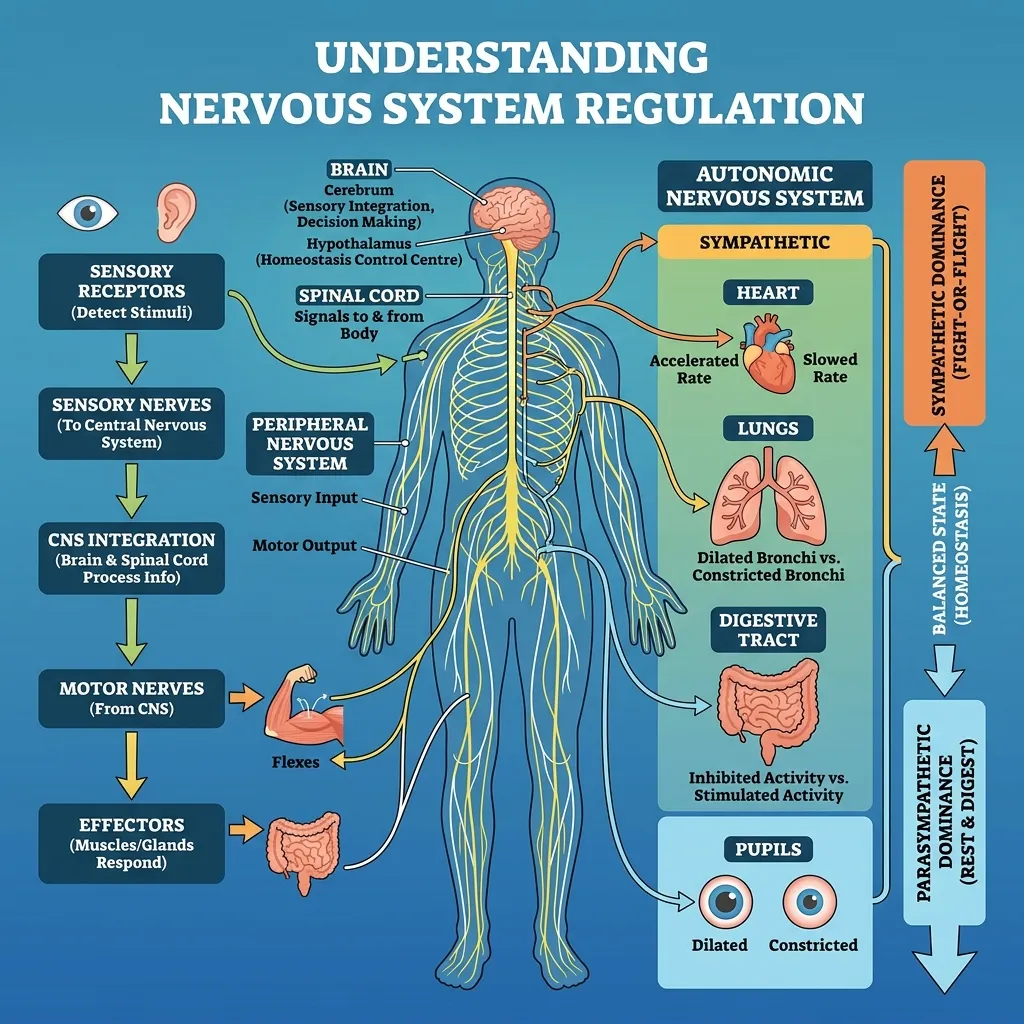
The autonomic nervous system (ANS) controls involuntary functions—heart rate, digestion, breathing, and stress responses. It has two main branches:
- The sympathetic nervous system (SNS): Your “fight-or-flight” system. It mobilizes energy, raises cortisol and adrenaline, and prepares the body to respond to threats.
- The parasympathetic nervous system (PNS): Your “rest-and-digest” system. It slows the heart rate, promotes digestion, lowers cortisol, and signals to the body that it’s safe to relax.
Nervous system regulation refers to the ability to move fluidly between these states—ramping up when needed and coming back down afterward. When this balance is disrupted by chronic stress, trauma, or poor sleep, the sympathetic nervous system stays switched on far longer than it should.
The result? Persistent anxiety, digestive issues, poor sleep, muscle tension, and difficulty concentrating. Nervous system recovery isn’t about eliminating stress entirely—it’s about restoring your capacity to return to calm.
How Does the Parasympathetic Nervous System Get Activated?
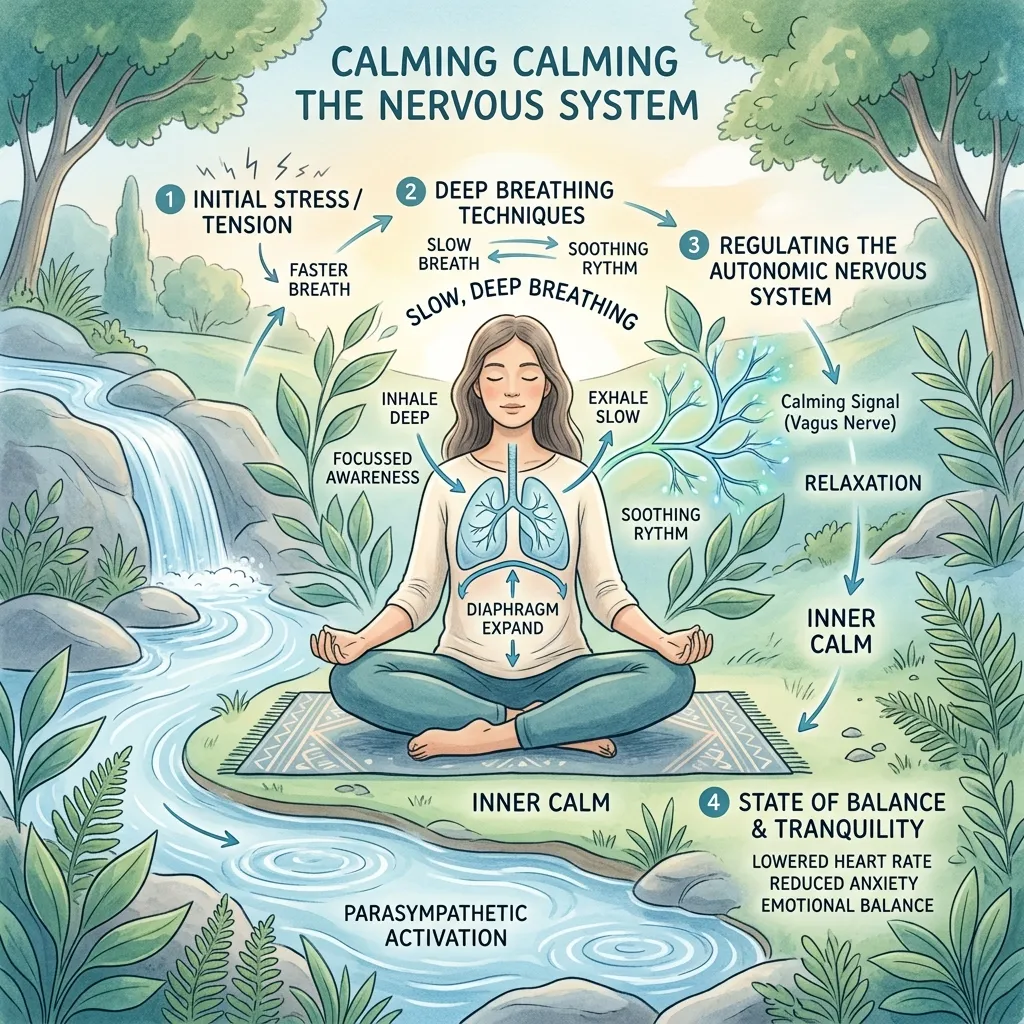
Parasympathetic nervous system activation happens through specific inputs to the brain and body—signals that communicate safety. If you’re learning how to calm your nervous system, understanding these pathways is an important first step. The most powerful of them runs through the vagus nerve, the longest cranial nerve in the body. It connects the brain to the heart, lungs, gut, and throat, and plays a central role in regulating stress responses.
When the vagus nerve is stimulated, it triggers a cascade of calming effects, including a slower heart rate, lower blood pressure, reduced inflammation, and a greater sense of physiological ease. This is why many techniques recommended for how to calm your nervous system—from humming and deep breathing to meditation—target the vagus nerve directly.
Dr. Stephen Porges’ Polyvagal Theory, developed in the 1990s and widely influential in trauma therapy today, explains that the nervous system constantly scans the environment for cues of safety or danger—a process called neuroception. By deliberately sending safety signals to the nervous system through breath, touch, sound, and movement, you can shift out of sympathetic activation and into a parasympathetic state, making it easier to calm your body and mind naturally.
10 Techniques to Calm Your Nervous System Naturally
1. Diaphragmatic Breathing to Activate the Vagus Nerve
Slow, deep breathing is one of the most well-researched nervous system relaxation techniques available. Specifically, extending the exhale longer than the inhale stimulates the vagus nerve and activates the parasympathetic nervous system.
Try the 4-7-8 technique: inhale for 4 counts, hold for 7, exhale for 8. A 2018 study published in Frontiers in Human Neuroscience found that slow breathing at 6 breaths per minute significantly increased heart rate variability (HRV)—a key marker of vagal tone and nervous system health.
Even 5 minutes of deliberate slow breathing can measurably shift the body’s stress response.
2. Cold Water Exposure for Nervous System Recovery
Splashing cold water on your face—or taking a cold shower—triggers the dive reflex, a physiological response that immediately slows the heart rate and activates the parasympathetic nervous system. Cold water stimulates the vagus nerve via the facial nerve branches, making it one of the fastest anxiety calming techniques available.
A 2021 study in PLOS ONE found that regular cold-water swimming was associated with reduced anxiety and improved mood, likely through repeated activation of the parasympathetic response.
If cold showers aren’t appealing, simply holding cold water on your face or wrists for 30 seconds can produce a noticeable calming effect.
3. Humming, Chanting, or Singing for Vagus Nerve Stimulation
The vagus nerve passes through the throat, meaning that activities that vibrate the vocal cords—humming, chanting, singing, or even gargling—directly stimulate vagal fibers. This makes them surprisingly effective stress relief techniques that require no equipment and can be done anywhere.
Practices like yoga’s “Bhramari pranayama” (humming bee breath) leverage this mechanism deliberately. Even humming your favorite song quietly has been shown to increase vagal activity.
4. Progressive Muscle Relaxation (PMR)
Developed by Dr. Edmund Jacobson in the 1920s and still widely used in clinical settings today, Progressive Muscle Relaxation involves systematically tensing and releasing muscle groups throughout the body. The contrast between tension and release sends powerful relaxation signals to the nervous system.
A 2019 meta-analysis published in the Journal of Behavioral Medicine found PMR to be effective in reducing anxiety and physiological stress markers across multiple populations. A full PMR session takes 15–20 minutes and is particularly effective when practiced before sleep.
5. Somatic Movement and Shaking
Animals in the wild physically shake after a threatening experience to discharge excess adrenaline and reset their nervous system. Humans largely don’t—but research suggests they should.
Somatic practices like TRE (Trauma and Tension Releasing Exercises), developed by Dr. David Berceli, involve inducing a controlled trembling in the body to release stored tension. Even simple, unstructured shaking of the limbs for a few minutes can help discharge sympathetic activation and support nervous system recovery.
Regular physical movement more broadly—especially rhythmic, bilateral movement like walking or swimming—helps regulate the nervous system over time by reducing baseline cortisol levels.
6. Mindfulness and Body Scanning
Mindfulness-based interventions are among the most studied natural stress management tools. A landmark 2014 meta-analysis published in JAMA Internal Medicine analyzed 47 clinical trials and found that mindfulness meditation programs produced moderate improvements in anxiety, depression, and pain.
A body scan—slowly directing attention from head to toe, noticing sensation without judgment—is particularly effective for nervous system relaxation because it keeps attention anchored in the present moment, reducing the anticipatory thinking that drives stress responses.
Apps like Insight Timer, Calm, and Headspace offer guided body scans that are accessible for beginners.
7. Safe Social Connection as a Regulatory Tool
According to Polyvagal Theory, co-regulation—the process of having your nervous system calmed by proximity to another regulated, safe human—is one of the most powerful parasympathetic activators available. This is why a phone call with a close friend, a hug, or even a calming conversation can shift your physiological state quickly.
Loneliness, conversely, is a significant driver of chronic sympathetic activation. Research published in Psychological Science (Cacioppo & Hawkley, 2010) found that loneliness is associated with elevated cortisol, disrupted sleep, and increased cardiovascular risk.
Prioritizing meaningful social connection is therefore a foundational, often underestimated component of nervous system regulation.
8. Time in Nature for Natural Stress Management
Spending time in natural environments demonstrably reduces stress. A 2019 study published in Frontiers in Psychology found that just 20 minutes spent in a natural setting significantly lowered cortisol levels in participants. The Japanese practice of Shinrin-yoku (forest bathing)—slow, mindful immersion in a natural environment—has accumulated a substantial body of research support.
Nature provides a multisensory environment full of safety cues: gentle sound, natural light, open space. These inputs help calm the nervous system by reducing the arousal associated with urban overstimulation.
9. Dietary Support for the Vagus-Gut Axis
The gut-brain connection is mediated largely through the vagus nerve, with roughly 80% of vagal fibers carrying information from the gut to the brain. This means gut health directly influences nervous system tone.
Foods that support the gut microbiome—fermented foods (kefir, kimchi, yogurt), prebiotic fiber (garlic, oats, bananas), and omega-3 fatty acids (fatty fish, flaxseed)—may support calmer baseline nervous system function. Conversely, high sugar intake, ultra-processed foods, and excessive caffeine can exacerbate nervous system dysregulation.
Limiting caffeine—especially after noon—is one of the simplest dietary changes for people experiencing chronic anxiety or disrupted sleep.
10. Sleep as the Foundation of Nervous System Recovery
Sleep is when the nervous system does most of its recovery work. During deep, slow-wave sleep, cortisol drops to its lowest point and the parasympathetic nervous system dominates. Chronic sleep deprivation keeps the sympathetic nervous system elevated during waking hours, significantly amplifying stress reactivity.
The CDC recommends 7–9 hours of sleep for adults. Sleep hygiene practices that support nervous system recovery include: maintaining a consistent sleep schedule, reducing screen exposure 60 minutes before bed, and keeping the bedroom cool and dark.
How Long Does It Take to Calm the Nervous System?
The timeline depends on whether you’re seeking immediate relief or long-term regulation.
- Immediate techniques (breathing, cold water, humming): These can shift your physiological state within 2–10 minutes by directly stimulating the vagus nerve or triggering the parasympathetic response.
- Medium-term practices (mindfulness, PMR, exercise): Practiced consistently over 4–8 weeks, these approaches build vagal tone and lower baseline stress reactivity.
- Long-term recovery (trauma therapy, lifestyle change): For those with nervous system dysregulation rooted in chronic stress or trauma, recovery may take months and benefit from professional support such as somatic therapy, EMDR, or cognitive behavioral therapy (CBT).
The key insight is that nervous system regulation responds to consistency. Short daily practices compound over time—even 10 minutes a day of intentional calming practice produces measurable changes in HRV and cortisol levels within weeks.
Build Your Nervous System Recovery Practice
Learning how to calm your nervous system isn’t a one-time fix—it’s an ongoing practice of sending safety signals to a body that has learned to stay on high alert. The techniques outlined here work through different mechanisms, which means combining a few of them is more effective than relying on just one.
Start with what feels most accessible: slow breathing and cold water require no equipment, no experience, and only a few minutes each day. From there, add movement, quality sleep, and meaningful social connection to strengthen your nervous system over time. As you consistently practice how to calm your nervous system, you’ll become better at recognizing signs of dysregulation and restoring balance before stress takes over.
If your symptoms are persistent, severe, or related to past trauma, consider working with a somatic therapist, psychologist, or psychiatrist alongside these self-directed practices for personalized support.
Frequently Asked Questions
What does a dysregulated nervous system feel like?
Common signs of nervous system dysregulation include chronic anxiety, hypervigilance, difficulty sleeping, digestive problems, muscle tension, emotional reactivity, and persistent fatigue. These symptoms indicate that the sympathetic nervous system is chronically overactivated.
What is the fastest way to calm the nervous system?
The fastest way to calm the nervous system is through slow, extended-exhale breathing (such as the 4-7-8 technique) or cold water applied to the face, both of which directly stimulate the vagus nerve and trigger the parasympathetic response within minutes.
What is vagus nerve stimulation and how does it help?
Vagus nerve stimulation refers to activating the vagus nerve—either through clinical devices or natural methods like humming, deep breathing, cold exposure, and singing. The vagus nerve is the primary pathway of the parasympathetic nervous system, so stimulating it directly reduces heart rate, lowers cortisol, and promotes calm.
Can diet affect nervous system regulation?
Yes. The gut-brain axis, mediated through the vagus nerve, means that gut health directly influences nervous system tone. Diets rich in fermented foods, prebiotic fiber, and omega-3 fatty acids support calmer baseline nervous system function, while excessive sugar, processed foods, and caffeine can worsen dysregulation.
Is it possible to calm the nervous system with exercise?
Yes. Regular aerobic exercise—especially rhythmic, bilateral movement like walking, swimming, or cycling—reduces baseline cortisol, builds vagal tone, and supports nervous system recovery over time. Acute high-intensity exercise can temporarily raise cortisol, so it is best paired with a cool-down period to complete the stress cycle.
What is the fastest way to calm your nervous system?
The fastest methods include slow diaphragmatic breathing, extended exhales, splashing cold water on your face, humming, and grounding exercises. These techniques stimulate the vagus nerve and activate the parasympathetic nervous system within minutes.
What causes the nervous system to become dysregulated?
Chronic stress, trauma, poor sleep, anxiety, excessive caffeine, illness, and prolonged emotional pressure can keep the sympathetic nervous system overactive, making it difficult for your body to relax and recover.
How does deep breathing calm the nervous system?
Deep diaphragmatic breathing increases vagal tone, lowers heart rate, reduces cortisol production, and signals your brain that you’re safe, helping shift your body into a calm, restorative state.
Can vagus nerve stimulation reduce anxiety?
Yes. Natural vagus nerve stimulation techniques such as humming, singing, cold exposure, meditation, and slow breathing have been shown to improve nervous system regulation and reduce symptoms of stress and anxiety.
How long does it take to regulate a stressed nervous system?
Some techniques provide relief within minutes, while lasting improvements typically require several weeks of consistent practice. Recovery from long-term stress or burnout may take several months.
Does exercise help calm the nervous system?
Yes. Low- to moderate-intensity activities such as walking, yoga, swimming, and tai chi support parasympathetic activation and improve nervous system resilience without placing excessive stress on the body.
Can poor sleep affect nervous system health?
Absolutely. Sleep is critical for nervous system repair. Chronic sleep deprivation keeps cortisol elevated, increases stress sensitivity, and slows emotional and physical recovery.
What foods support a healthy nervous system?
Foods rich in magnesium, omega-3 fatty acids, B vitamins, probiotics, and antioxidants—such as leafy greens, fatty fish, yogurt, nuts, seeds, berries, and whole grains—help support healthy nerve function and stress regulation.
Is meditation effective for calming the nervous system?
Yes. Regular mindfulness meditation and body scan practices can lower stress hormones, improve emotional regulation, enhance vagal tone, and strengthen the body’s natural relaxation response over time.
When should I seek professional help for nervous system dysregulation?
Seek professional help if your symptoms are severe, persistent, or significantly affecting daily functioning, sleep, or relationships. Somatic therapy, EMDR, cognitive behavioral therapy (CBT), and psychiatric evaluation are all appropriate options, particularly for nervous system dysregulation linked to trauma or chronic anxiety disorders.
