



Healthy lifestyle goals are realistic, sustainable habits that improve your physical and mental wellbeing over time. By focusing on small changes like eating healthier, staying active, getting enough sleep, and managing stress, you can build lasting routines that support long-term health and wellness.
Healthy lifestyle goals are specific, realistic targets that improve your physical and mental wellbeing over time. The most effective ones focus on small, sustainable habits—like drinking more water, walking daily, or sleeping seven hours—rather than drastic overhauls. Consistency beats intensity, and changes you can maintain for years matter far more than quick fixes.
Most people set health goals with the best intentions, then quietly abandon them by February. The problem usually isn’t willpower—it’s strategy. Goals that are too vague, too ambitious, or disconnected from daily life tend to collapse under pressure.
This guide takes a different approach. Instead of promising dramatic transformations, it focuses on the kind of steady, realistic changes that actually stick. You’ll learn how to set meaningful health and wellness goals, build habits that fit your everyday routine, and create a daily wellness practice you can maintain for years—not weeks.
Whether you’re starting from scratch or trying to get back on track, the ideas below will help you build a healthier life one manageable step at a time.
What Are Healthy Lifestyle Goals?

Healthy lifestyle goals are intentional commitments to improve how you eat, move, rest, and feel. They span physical fitness, nutrition, mental health, sleep, and stress management. Unlike a single resolution—”lose 20 pounds”—a lifestyle goal focuses on the habits and routines that support long-term wellbeing.
The difference matters. Outcome goals (like reaching a certain weight) depend on factors you can’t fully control. Habit goals (like cooking dinner at home four nights a week) are entirely within your reach. When you focus on the habits, the outcomes tend to follow.
Good healthy living goals share a few traits. They’re specific, measurable, and tied to your actual life. They’re realistic enough to achieve, yet meaningful enough to matter. And crucially, they’re sustainable—designed to last well beyond an initial burst of motivation.
How Do You Set Realistic Personal Health and Wellness Goals?
The most common mistake is aiming too high too fast. Deciding to work out every single day, eliminate sugar entirely, and meditate for an hour each morning—all starting Monday—is a recipe for burnout.
A better method is to start with one or two changes and build from there. Behavioral research consistently shows that small wins create momentum. Each success makes the next change feel more achievable.
Use the SMART framework
A reliable way to shape your goals is to make them SMART: Specific, Measurable, Achievable, Relevant, and Time-bound. Compare these two goals:
- Vague: “I want to eat healthier.”
- SMART: “I’ll eat at least two servings of vegetables with dinner, five nights a week, for the next month.”
The second version tells you exactly what to do, how to measure it, and when to check your progress. That clarity is what turns intentions into action.
Anchor goals to your “why”
Goals tied to a personal reason last longer than those driven by guilt or comparison. Maybe you want more energy to keep up with your kids, or you want to reduce your risk of a condition that runs in your family. Connecting your goals to something you genuinely care about gives you a reason to keep going when motivation dips.
What Are the Best Healthy Habits for Everyday Life?
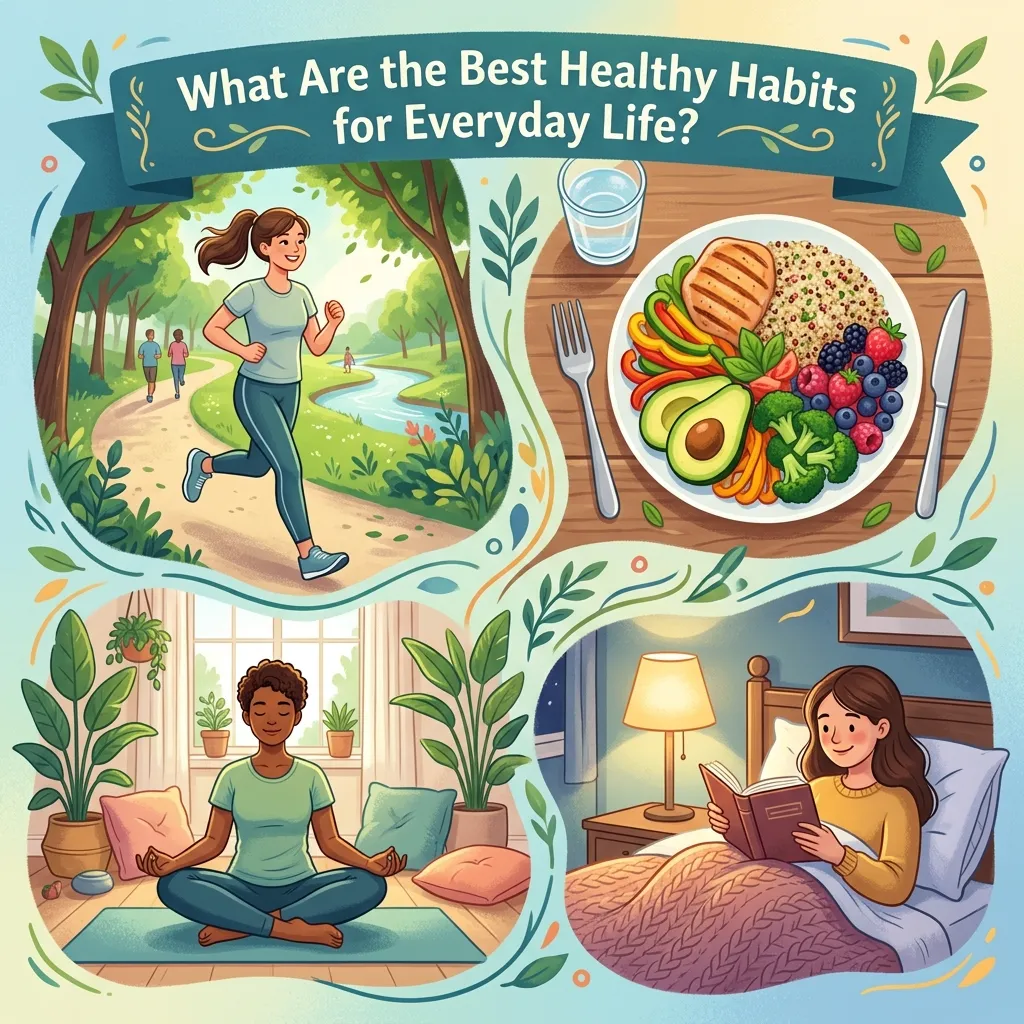
You don’t need a gym membership or a meal-prep empire to live well. Some of the most effective healthy habits are remarkably simple and fit easily into a normal day.
- Drink more water. Start your morning with a glass of water before coffee. Mild dehydration affects energy, mood, and focus.
- Move regularly. Take the stairs, park farther away, or go for a short walk after meals. Movement throughout the day adds up.
- Prioritize sleep. Most adults need seven to nine hours. A consistent bedtime does more for your health than almost any supplement.
- Eat whole foods. Build meals around vegetables, lean proteins, whole grains, and healthy fats.
- Limit screen time before bed. Cutting screens 30 minutes before sleep can improve how quickly you fall asleep and how rested you feel.
The key is repetition. A habit done imperfectly but consistently beats a perfect routine you can only manage once.
How Can You Set Fitness and Wellness Goals That Last?
Fitness goals fail most often when they ignore your starting point. If you haven’t exercised in years, committing to a daily hour at the gym sets you up for soreness, frustration, and quitting.
Instead, match your goals to your current fitness level and schedule. A realistic starting point might be three 20-minute workouts a week. Once that feels routine, you can add time, intensity, or frequency.
Mix different types of movement
A balanced fitness plan includes a few elements:
- Cardio for heart health—walking, cycling, swimming, or dancing.
- Strength training to maintain muscle and bone density, which becomes more important with age.
- Flexibility and mobility work, like stretching or yoga, to prevent injury and improve range of motion.
You don’t need all three every day. Spreading them across the week keeps things varied and reduces the risk of overuse injuries.
Find movement you enjoy
The best exercise is the one you’ll actually do. If you dread running, you won’t stick with it. Experiment until you find activities that feel less like a chore and more like something you look forward to.
What Are Smart Nutrition and Healthy Eating Goals?
Nutrition doesn’t have to mean restriction. The most sustainable eating goals focus on adding good foods rather than obsessing over what to cut.
Start with simple, achievable targets:
- Add a serving of vegetables to one meal a day, then build from there.
- Swap sugary drinks for water or unsweetened alternatives.
- Cook at home more often, where you control the ingredients and portions.
- Practice mindful eating—slow down, notice when you’re full, and enjoy your food.
Crash diets and extreme restriction rarely last. They often trigger a cycle of deprivation and overeating. A balanced, flexible approach—where no food is strictly forbidden—is far easier to maintain over the long term.
Plan ahead when you can
A little preparation removes much of the friction. Keep healthy snacks within reach, plan a few meals for the week, and stock your kitchen with staples you can throw together quickly. When healthy choices are convenient, you’re more likely to make them.
How Do You Build a Daily Wellness Routine?
A daily wellness routine ties your healthy habits together into something automatic. Routines reduce decision fatigue—when actions become automatic, you don’t have to summon willpower every time.
A simple routine might look like this:
- Morning: A glass of water, a few minutes of stretching, and a balanced breakfast.
- Midday: A short walk, a nutritious lunch, and a quick mental reset away from your screen.
- Evening: A home-cooked dinner, screen-free wind-down time, and a consistent bedtime.
You don’t have to adopt all of this at once. Pick one anchor habit—say, a morning glass of water—and attach new habits to it over time. This technique, often called habit stacking, makes new behaviors easier to remember and maintain.
How Do You Set Long-Term Health Goals?
Long-term health goals look beyond the next few weeks. They’re about the kind of life you want to be living in five, ten, or twenty years—and the habits that will get you there.
These might include maintaining a healthy weight, keeping your blood pressure in a healthy range, staying active well into older age, or protecting your mental health. Because they unfold slowly, long-term goals require patience and a willingness to track progress over months rather than days.
Break big goals into smaller milestones. If your aim is to run a 5K, your milestones might be walking 30 minutes comfortably, then jogging intervals, then running continuously. Each milestone is a win that keeps you moving toward the larger goal.
It also helps to expect setbacks. Life gets busy, motivation fades, and routines slip. What matters is not avoiding every stumble but getting back on track quickly when one happens.
What Are the Best Tips for Sustainable Healthy Lifestyle Changes?
Sustainability is the difference between a phase and a lifestyle. Here are practical tips to make your changes last:
- Start small. One new habit at a time is more sustainable than a complete overhaul.
- Be consistent, not perfect. Missing a day doesn’t undo your progress. Just pick up where you left off.
- Track your progress. A simple journal or app helps you see how far you’ve come and stay motivated.
- Build a support system. Friends, family, or a community can keep you accountable and encouraged.
- Celebrate wins. Acknowledge your progress, even small steps. Positive reinforcement keeps you going.
- Adjust as needed. Life changes, and so should your goals. Flexibility keeps your routine realistic.
The goal isn’t to be perfect. It’s to keep showing up, day after day, in ways you can sustain.
Your Next Step Toward a Healthier Life

Lasting health doesn’t come from a single dramatic decision—it comes from the small, repeated choices you make every day. Pick one goal from this guide that feels achievable and turn it into your Healthy Lifestyle Goals. Maybe it’s drinking more water, walking after dinner, or setting a consistent bedtime. Start there.
Once that habit feels natural, add another. Over time, these small changes compound into a healthier, more energized version of yourself. Building strong Healthy Lifestyle Goals is not about doing everything at once—it’s about doing one thing consistently, then growing from there.
Frequently Asked Questions
What is a realistic healthy lifestyle goal to start with?
Start with one simple, specific habit—like drinking a glass of water each morning, walking for 20 minutes a day, or adding a serving of vegetables to one meal. Small, achievable goals build momentum and are easier to maintain than dramatic changes.
How long does it take to form a healthy habit?
Research suggests it takes anywhere from a few weeks to a few months to form a habit, depending on the person and the behavior. The key is consistency. Repeating an action in the same context daily helps it become automatic over time.
How many health goals should I set at once?
Focus on one or two goals at a time. Trying to change too many things at once often leads to burnout. Once your initial goals feel routine, you can add new ones gradually.
What’s the difference between a habit goal and an outcome goal?
An outcome goal is a result you want, like losing weight. A habit goal is the action that leads there, like cooking at home four nights a week. Habit goals are more reliable because they’re fully within your control.
How do I stay motivated when progress feels slow?
Track your progress, celebrate small wins, and connect your goals to a personal reason that matters to you. Building a support system and expecting occasional setbacks also helps you stay consistent over the long term.
What are healthy lifestyle goals?
Healthy lifestyle goals are specific habits and routines that improve your physical, mental, and emotional health over time.
What is a good healthy lifestyle goal for beginners?
Start with simple goals like drinking more water, walking for 20–30 minutes daily, or eating an extra serving of vegetables.
How do I set realistic healthy lifestyle goals?
Use the SMART goal framework—make your goals Specific, Measurable, Achievable, Relevant, and Time-bound.
How many healthy lifestyle goals should I work on at once?
Focus on one or two goals at a time to avoid burnout and improve your chances of long-term success.
How long does it take to build a healthy habit?
It varies by person, but most habits take several weeks to a few months of consistent practice to become automatic.
Why are small lifestyle changes more effective?
Small, sustainable changes are easier to maintain and often lead to lasting improvements in overall health.
What are the best daily habits for a healthy lifestyle?
Drinking enough water, exercising regularly, eating balanced meals, sleeping well, and managing stress are excellent daily habits.
How can I stay motivated to reach my health goals?
Track your progress, celebrate small achievements, and focus on the personal benefits of your healthy lifestyle goals rather than quick results.
Can healthy lifestyle goals improve mental health?
Yes. Regular exercise, quality sleep, healthy nutrition, and stress management can reduce anxiety, improve mood, and support better mental wellbeing.
What should I do if I miss a day or fall behind?
Don’t give up. Simply restart the next day and stay consistent, as long-term success comes from persistence rather than perfection.
