


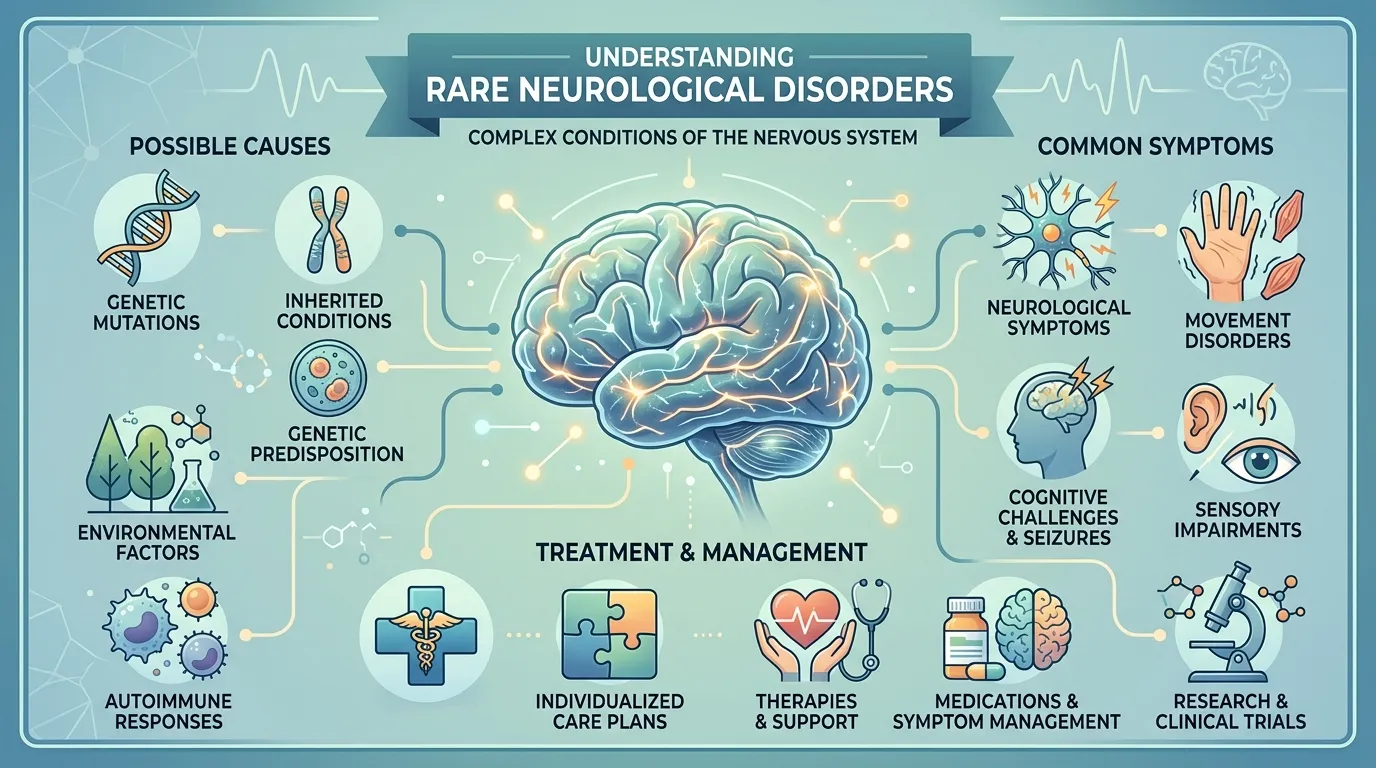
Rare neurological disorders are diseases affecting the brain, spinal cord, or nervous system that occur in fewer than 1 in 2,000 people. They can be genetic, autoimmune, or caused by unknown factors. Many remain undiagnosed for years. Early detection, genetic testing, and specialized care significantly improve outcomes.
Millions of people worldwide live with a neurological condition that most physicians have never encountered in their careers. These are rare neurological disorders—complex, often misunderstood diseases of the brain and nervous system that, despite their low prevalence, collectively affect hundreds of millions of people globally.
The National Institutes of Health (NIH) estimates there are nearly 7,000 rare diseases currently identified, and a significant portion of them involve the nervous system. For patients and their families, the path from first symptoms to an accurate diagnosis can take years—sometimes decades. Many rare neurological conditions are genetic in origin, meaning they may be passed from parent to child before anyone realizes a problem exists.
This guide covers the full landscape of rare neurological disorders: what they are, how they’re categorized, the warning signs they produce, what causes them, and the treatment options available today. Whether you’re a patient, caregiver, or simply someone seeking to understand this complex field, this post will give you a clear, medically grounded overview.
What Are Rare Brain and Nervous System Diseases?
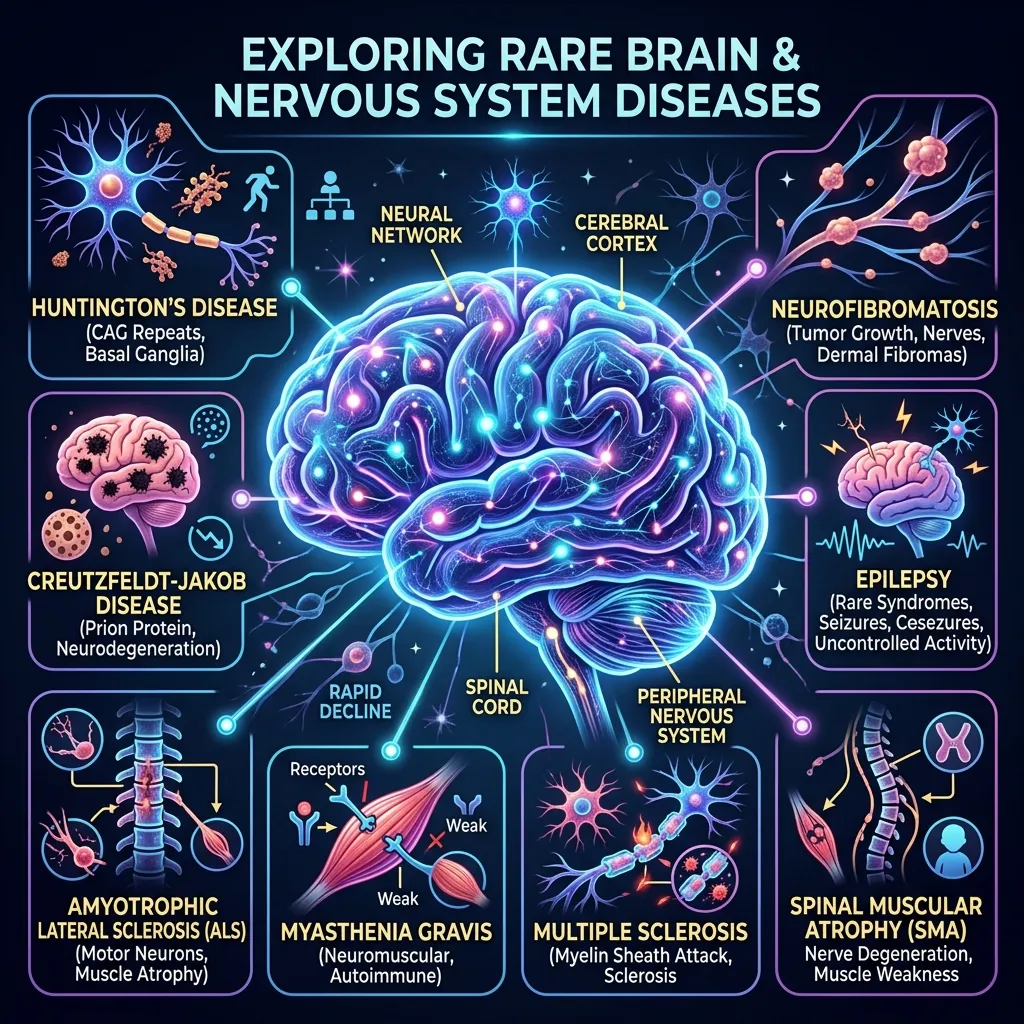
A disease is generally classified as “rare” when it affects fewer than 1 in 2,000 people in the general population, according to the European Organization for Rare Diseases (EURORDIS). Rare neurological disorders fall within this definition but are specifically limited to conditions that affect the central nervous system (the brain and spinal cord) or the peripheral nervous system (the network of nerves throughout the body).
These disorders differ from common neurological conditions like migraines or epilepsy in several key ways. They are harder to diagnose, less well-funded by research institutions, and often lack approved treatments. A neurologist in a major medical center may see only a handful of cases in an entire career. That scarcity creates a serious challenge: patients frequently visit multiple doctors before receiving an accurate diagnosis.
Despite their rarity as individual conditions, rare neurological disorders are common as a category. According to Global Genes, a rare disease advocacy organization, roughly 300 million people worldwide live with some form of rare disease—and neurological conditions represent one of the largest subgroups.
What Are the Symptoms of Uncommon Neurological Conditions?
Symptoms of rare neurological disorders vary enormously depending on which part of the nervous system is affected. However, several warning signs appear across many conditions and should prompt further evaluation.
Common symptoms associated with rare neurological disorders include:
- Progressive muscle weakness or paralysis
- Loss of coordination and balance (ataxia)
- Cognitive decline, memory loss, or personality changes
- Seizures that don’t respond to standard epilepsy medications
- Involuntary movements, tremors, or muscle rigidity
- Vision loss, hearing impairment, or sensory disturbances
- Chronic, unexplained pain or numbness in the limbs
- Speech and swallowing difficulties
One of the challenges in diagnosing rare neurological conditions is that these symptoms overlap with many more common diseases. A patient with progressive muscle weakness might be evaluated for multiple sclerosis, ALS, or Parkinson’s disease before a rarer cause is considered. This overlap contributes to the well-documented diagnostic odyssey that many rare disease patients experience.
What Causes Rare Neurological Diseases?
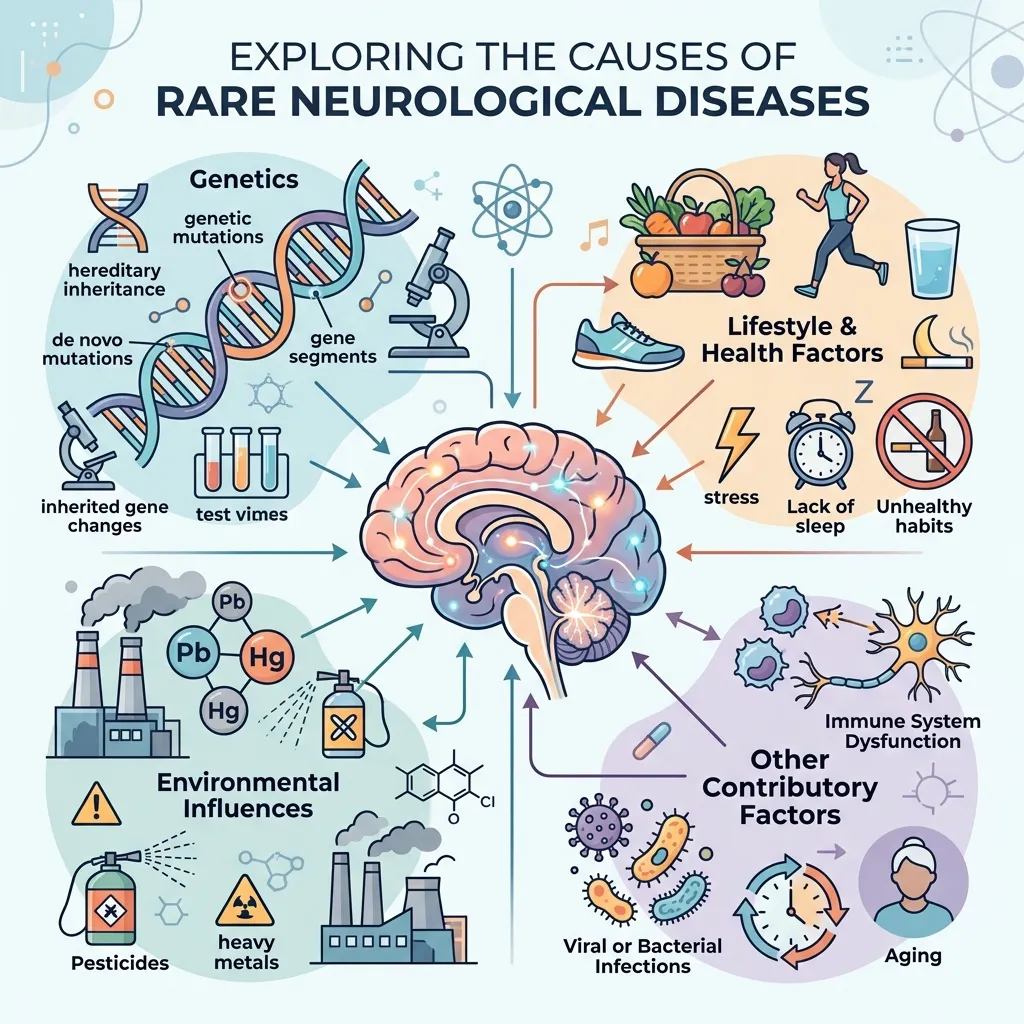
The causes of rare neurological diseases span a wide spectrum, from inherited genetic mutations to misdirected immune responses. Understanding the underlying cause is critical—not only for diagnosis but for selecting the most appropriate treatment.
Genetic Mutations and Inherited Nervous System Disorders
A large proportion of rare neurological disorders have a genetic basis. These conditions are caused by mutations in specific genes that disrupt how the nervous system develops or functions. Inherited nervous system disorders can follow several patterns of transmission:
- Autosomal dominant: A single copy of the mutated gene is enough to cause the disorder (e.g., Huntington’s disease)
- Autosomal recessive: Two copies of the mutated gene are required (e.g., Friedreich’s ataxia, Tay-Sachs disease)
- X-linked: The mutation is carried on the X chromosome (e.g., Adrenoleukodystrophy)
- Mitochondrial: The mutation affects mitochondrial DNA and is inherited maternally (e.g., MELAS syndrome)
Advances in genetic sequencing—particularly whole-exome and whole-genome sequencing—have accelerated the identification of disease-causing mutations, helping families receive answers faster than ever before.
Autoimmune Rare Neurological Disorders
Some rare neurological disorders occur when the immune system mistakenly targets healthy nerve tissue. These autoimmune neurological disorders can affect the brain, spinal cord, peripheral nerves, or neuromuscular junctions.
Examples include:
- Anti-NMDA receptor encephalitis: An autoimmune condition where antibodies attack NMDA receptors in the brain, causing psychiatric symptoms, seizures, and memory loss
- Neuromyelitis optica spectrum disorder (NMOSD): An autoimmune disease causing severe inflammation in the optic nerves and spinal cord
- Lambert-Eaton myasthenic syndrome (LEMS): A rare disorder where autoantibodies block calcium channels at the neuromuscular junction, impairing muscle control
Autoimmune neurological disorders are particularly difficult to diagnose because they can mimic psychiatric conditions, stroke, or common demyelinating diseases.
Environmental and Unknown Causes
Some rare neurological diseases are triggered by environmental exposures (such as toxins or infections), while others have no identified cause. Prion diseases, for example, are caused by abnormally folded proteins that trigger a chain reaction of neurological damage. Creutzfeldt-Jakob disease (CJD), the most common human prion disease, affects approximately 1–2 people per million annually worldwide, according to the CDC.
Genetic Rare Neurological Disorders: A List of Key Conditions
The following is a representative list of genetic rare neurological disorders, grouped by their primary mechanism:
Lysosomal storage disorders:
- Gaucher disease
- Niemann-Pick disease
- Krabbe disease
Inherited movement disorders:
- Huntington’s disease
- Spinocerebellar ataxias (SCAs)
- Friedreich’s ataxia
Rare leukodystrophies (white matter diseases):
- Adrenoleukodystrophy (ALD)
- Metachromatic leukodystrophy (MLD)
- Canavan disease
Neuromuscular genetic disorders:
- Spinal muscular atrophy (SMA)
- Duchenne muscular dystrophy (DMD)
- Charcot-Marie-Tooth disease (CMT)
This list is not exhaustive. The NIH Genetic and Rare Diseases Information Center (GARD) catalogs thousands of rare genetic conditions, many of which have neurological involvement.
Childhood Rare Neurological Syndromes
Children are disproportionately affected by rare neurological disorders, largely because many of these conditions are genetic and manifest early in development. Childhood rare neurological syndromes often disrupt neurodevelopment, affecting a child’s ability to move, communicate, learn, and grow.
Key examples include:
- Rett syndrome: A genetic disorder almost exclusively affecting girls, causing loss of purposeful hand use, speech regression, and severe cognitive impairment. Caused by mutations in the MECP2 gene.
- Angelman syndrome: Characterized by severe intellectual disability, seizures, and a generally happy demeanor, caused by a missing or nonfunctioning UBE3A gene.
- Batten disease (Neuronal Ceroid Lipofuscinoses): A fatal group of inherited nervous system disorders that cause progressive loss of motor and cognitive function in children.
- Dravet syndrome: A severe, treatment-resistant epilepsy that begins in infancy, often associated with SCN1A gene mutations.
Early diagnosis in children is especially important because some conditions—such as SMA and phenylketonuria (PKU)—have treatments that are most effective when started shortly after birth. This is a primary reason why newborn screening programs continue to expand their panels to include more rare diseases.
How Are Rare Neurological Disorders Diagnosed?
Diagnosing rare neurological disorders is one of the most challenging tasks in medicine. The average rare disease patient sees 7.3 physicians and waits 4.8 years before receiving an accurate diagnosis, according to a survey by the National Organization for Rare Disorders (NORD).
The Diagnostic Process for Rare Neurological Conditions
Diagnosis typically involves a combination of:
- Clinical evaluation: A detailed neurological examination and review of symptom history
- Neuroimaging: MRI and CT scans to detect structural abnormalities, lesions, or atrophy
- Electrophysiological testing: EMG and nerve conduction studies for neuromuscular disorders
- Cerebrospinal fluid (CSF) analysis: To detect inflammatory markers, autoantibodies, or prion proteins
- Genetic testing: Panel testing, whole-exome sequencing, or whole-genome sequencing to identify mutations
- Metabolic testing: Blood and urine tests to identify enzyme deficiencies common in lysosomal storage disorders
- Biopsy: In some cases, nerve or muscle tissue may be biopsied
Referral to a specialist center with experience in rare neurological conditions significantly improves diagnostic accuracy. Academic medical centers and rare disease clinics often have access to diagnostic tools and expertise that are not available in general neurology practices.
Treatment Options for Rare Neurological Conditions
Treatment approaches for rare neurological conditions vary significantly depending on the underlying cause. Some conditions now have disease-modifying therapies, while others are still managed symptomatically.
Gene Therapies and Emerging Treatments
Gene therapy represents one of the most exciting frontiers in rare neurological disease treatment. In 2019, the FDA approved onasemnogene abeparvovec (Zolgensma) for spinal muscular atrophy—a single-dose gene therapy that replaces the defective SMN1 gene. According to Novartis, the therapy has shown dramatic improvements in motor function and survival in treated infants.
Similarly, gene therapies are in clinical trials for conditions including Rett syndrome, Batten disease, and certain leukodystrophies.
Enzyme Replacement Therapy (ERT)
For lysosomal storage disorders such as Gaucher disease and Fabry disease, enzyme replacement therapies are available and can significantly reduce disease burden. ERT works by delivering functional versions of the missing or defective enzyme directly into the bloodstream.
Immunotherapy for Autoimmune Neurological Disorders
Autoimmune neurological conditions are typically treated with immunosuppressive therapies. These may include:
- High-dose corticosteroids
- Intravenous immunoglobulin (IVIG)
- Plasma exchange (plasmapheresis)
- Rituximab or other monoclonal antibody therapies
For conditions like anti-NMDA receptor encephalitis, prompt immunotherapy can lead to significant or complete recovery, making early diagnosis critically important.
Symptomatic and Supportive Care
Across most rare neurological disorders, a multidisciplinary approach to care is essential. Neurologists, genetic counselors, physical and occupational therapists, speech-language pathologists, and palliative care specialists all play roles in managing complex cases. Supportive care focuses on maintaining quality of life, managing pain, and preserving function for as long as possible.
Rare Neurodegenerative Diseases: A Special Category
Rare neurodegenerative diseases deserve particular attention because of their progressive and often fatal nature. These conditions involve the gradual death of neurons, leading to irreversible loss of function over time.
Key rare neurodegenerative diseases include:
- Multiple system atrophy (MSA): A progressive disorder affecting movement, balance, and autonomic function
- Progressive supranuclear palsy (PSP): A brain disorder affecting walking, balance, and eye movement
- Corticobasal degeneration (CBD): A rare condition causing progressive loss of nerve cells in the brain’s cortex and basal ganglia
- Fatal familial insomnia (FFI): An extremely rare prion disease causing progressive insomnia, autonomic dysfunction, and dementia
For most rare neurodegenerative diseases, no disease-modifying treatments exist as of 2024. Research efforts are ongoing, with several clinical trials exploring neuroprotective compounds and gene-silencing technologies.
Living with a Rare Neurological Disorder: Where to Find Help
A diagnosis of a rare neurological disorder is life-changing—for patients and families alike. Support networks, patient registries, and advocacy organizations are vital resources.
Key organizations include:
- NORD (National Organization for Rare Disorders): nord.rarediseases.org
- NIH National Center for Advancing Translational Sciences (NCATS): ncats.nih.gov
- EURORDIS (Rare Diseases Europe): eurordis.org
- Global Genes: globalgenes.org
Participating in a patient registry or clinical trial is one of the most impactful steps a patient can take—both for accessing cutting-edge treatments and for advancing research that could help future generations.
Frequently Asked Questions
What qualifies as a rare neurological disorder?
A rare neurological disorder is any condition affecting the brain, spinal cord, or peripheral nervous system that occurs in fewer than 1 in 2,000 people in the general population. Examples include Huntington’s disease, Rett syndrome, anti-NMDA receptor encephalitis, and prion diseases.
How are rare neurological disorders diagnosed?
Diagnosis typically combines neurological examination, MRI, blood and CSF tests, electrophysiological studies, and genetic sequencing. Rare disease specialists at academic medical centers often lead diagnostic efforts, as general practitioners may be unfamiliar with less common presentations.
Are rare neurological disorders always genetic?
No. Although many rare neurological disorders are inherited or caused by de novo genetic mutations, others are autoimmune, triggered by environmental exposures, or caused by unknown factors. Prion diseases, for example, can be sporadic (occurring without a known cause).
Can rare neurological disorders be cured?
A small number of rare neurological disorders now have disease-modifying treatments, including gene therapies for spinal muscular atrophy and enzyme replacement therapies for certain lysosomal storage disorders. Most, however, remain without a cure and are managed through supportive care.
At what age do rare neurological disorders typically appear?
It varies widely. Some, like Batten disease and Dravet syndrome, present in early childhood. Others, like Huntington’s disease, typically manifest in mid-adulthood. A few, like Creutzfeldt-Jakob disease, predominantly affect older adults. The age of onset is often linked to the underlying cause.
Where can patients find clinical trials for rare neurological conditions?
ClinicalTrials.gov lists all federally and privately funded clinical studies in the United States. Patients can search by condition name to find active trials, eligibility criteria, and enrollment contacts.
