


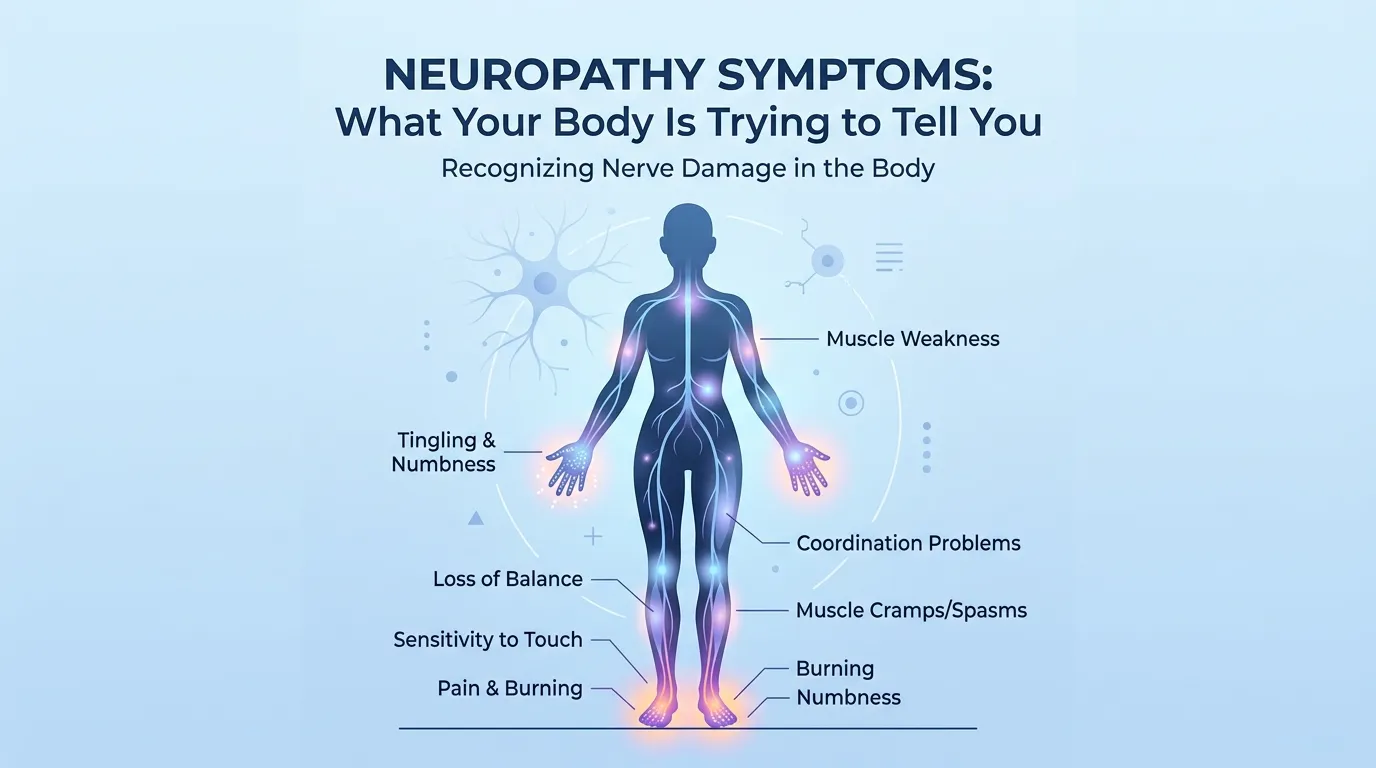
Neuropathy symptoms include tingling, numbness, burning pain, and weakness, usually starting in the hands and feet. The most common cause is diabetic neuropathy, but nerve damage can also result from vitamin deficiencies, alcohol use, infections, or other conditions. Early symptoms are often subtle but can progress over time, making early detection and treatment important for preventing long-term complications.
Neuropathy symptoms range from tingling, numbness, and burning sensations in the hands and feet to sharp nerve pain and muscle weakness. Diabetic neuropathy is the most common cause, though nerve damage can stem from many sources. Early detection significantly improves treatment outcomes.
That strange tingling in your feet you’ve been ignoring? The burning sensation that keeps you up at night? These aren’t random quirks your body is throwing at you. They’re signals—and in many cases, they’re worth taking seriously.
Neuropathy, or peripheral neuropathy, is a condition caused by damage to the peripheral nerves—the vast network that carries messages between the brain, spinal cord, and the rest of the body. According to the National Institute of Neurological Disorders and Stroke, more than 20 million Americans are estimated to have some form of peripheral neuropathy. Yet many people go undiagnosed for years simply because the early symptoms are easy to dismiss.
Understanding what neuropathy actually feels like—and what causes it—can make an enormous difference. Caught early, nerve damage is often manageable. Left untreated, it can lead to serious complications, including falls, infections, and in severe cases, permanent disability.
This post covers the full picture: the early warning signs, the most common symptom patterns, what causes nerve damage in the first place, and what happens when the autonomic nervous system gets involved.
What Is Peripheral Neuropathy, and Why Does It Cause So Many Different Symptoms?
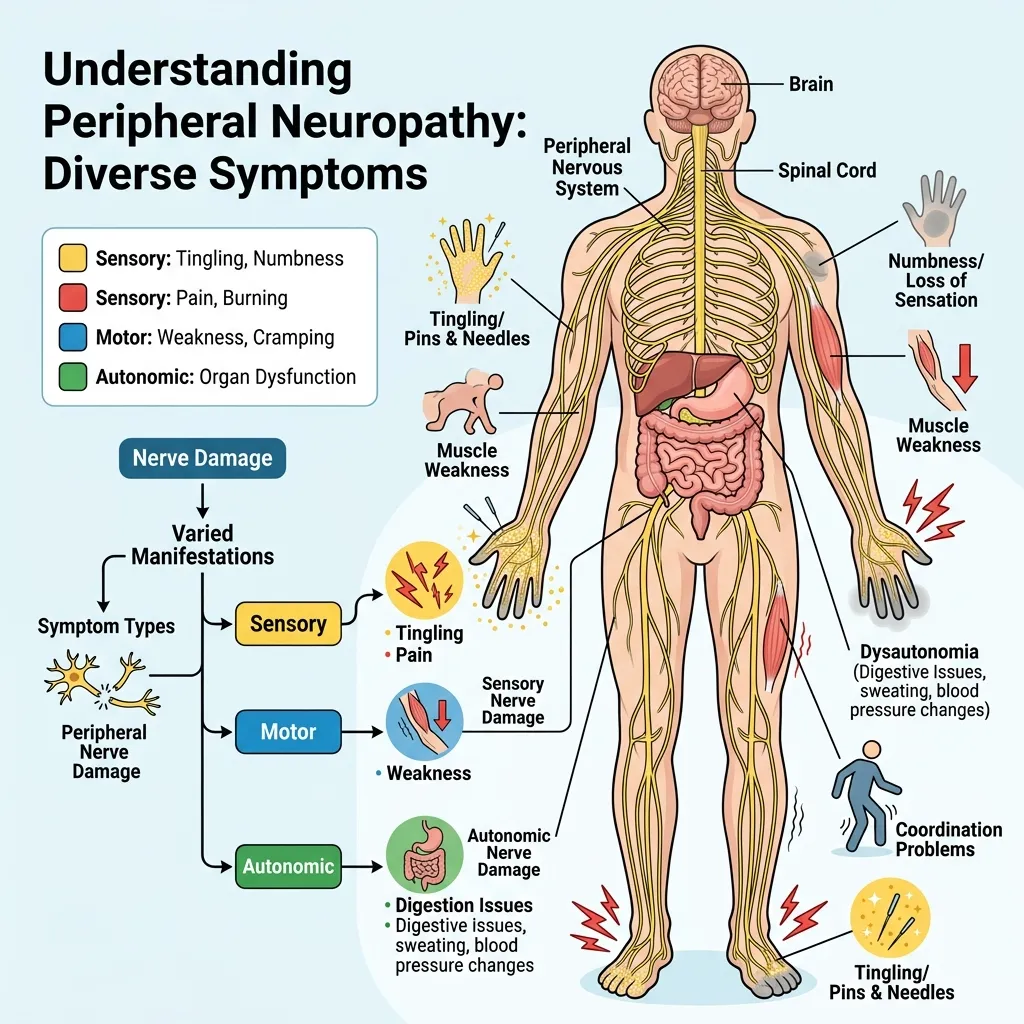
The peripheral nervous system is responsible for relaying sensory information (touch, pain, temperature) from the body to the brain, as well as motor signals from the brain to the muscles. It also controls involuntary functions like heart rate, digestion, and blood pressure through a branch called the autonomic nervous system.
When peripheral nerves are damaged—whether from disease, injury, or toxins—the signals they carry become distorted, weakened, or lost entirely. The result is a wide range of symptoms that depend on which nerves are affected and how severely.
There are three main types of peripheral nerves:
- Sensory nerves, which detect temperature, pain, vibration, and touch
- Motor nerves, which control muscle movement
- Autonomic nerves, which regulate automatic functions like sweating, digestion, and bladder control
Damage to each type produces distinct symptoms. That’s why neuropathy can feel completely different from one person to the next.
What Are the Early Symptoms of Nerve Damage?
Early neuropathy is notoriously subtle. Symptoms often begin gradually and are so mild that people attribute them to tiredness, aging, or minor injury. This is one of the key reasons the condition goes undiagnosed for so long.
The earliest signs typically appear in the hands and feet—specifically in the fingertips and toes—because the longest nerves in the body are the first to be affected. This pattern is sometimes called a “stocking-glove” distribution.
Common early symptoms include:
- A faint tingling or “pins and needles” sensation that comes and goes
- Mild numbness in the toes or fingers
- Sensitivity to touch—ordinary sensations may feel unusually intense or uncomfortable
- A slight feeling of weakness or clumsiness when gripping objects or walking
- Muscle cramps, particularly at night
These early signs are easy to miss, especially when they appear intermittently. But if they’re recurring, spreading, or worsening over time, they’re worth discussing with a doctor.
Tingling and Numbness in the Extremities: What’s Actually Happening?
Tingling and numbness are the most universally recognized neuropathy symptoms. Medically, tingling is called paresthesia—an abnormal sensation that occurs when a nerve fires incorrectly or inconsistently. Numbness, on the other hand, represents a loss of sensation, indicating that the nerve’s ability to transmit signals has been reduced or blocked.
The sensation can range from a mild buzzing or static feeling to a complete loss of feeling in an affected limb. Some people describe it as wearing an invisible glove or sock they can’t remove.
What makes these symptoms particularly concerning is that numbness in the feet creates a feedback problem: you lose the ability to detect pain, pressure, or injury. A small cut on a numb foot can go unnoticed and develop into a serious wound. This is especially dangerous for people with diabetes, whose circulation is often already compromised.
Burning Sensation in the Hands and Feet: Why Nerves Create Pain Without an Injury
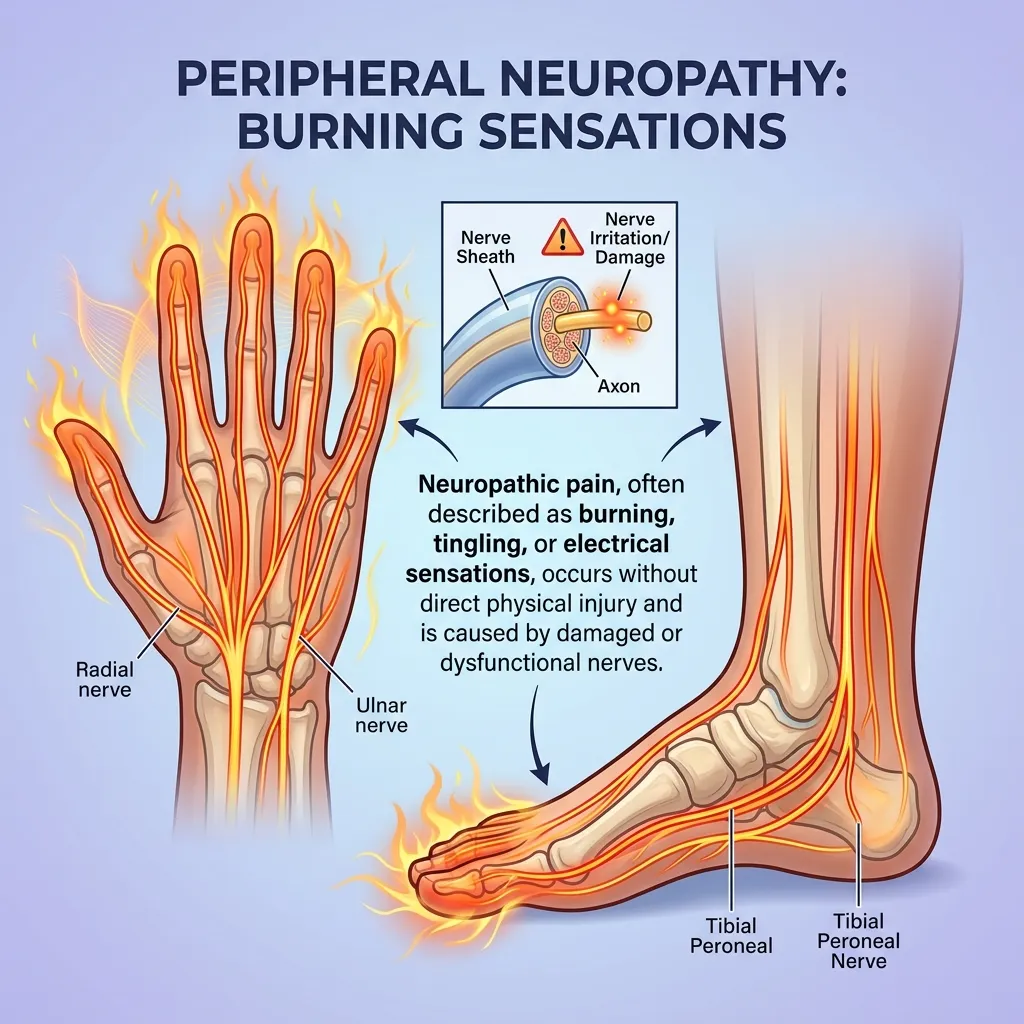
One of the more distressing neuropathy symptoms is a burning sensation—often described as a deep, persistent heat in the hands, feet, or legs that has no apparent cause.
This type of pain is classified as neuropathic pain, which originates within the nervous system itself rather than from tissue damage. When sensory nerves are damaged, they can become hyperactive and misfire constantly, sending pain signals to the brain even when nothing harmful is happening to the skin or tissue.
The burning often worsens at night, which is why many people with neuropathy report significant sleep disruption. It can also be triggered by light touch—even the weight of a bedsheet can feel unbearable for some patients.
Other characteristics of neuropathic pain include:
- Sharp, stabbing, or electric shock-like sensations
- Allodynia—pain caused by stimuli that would not normally be painful
- Hypersensitivity to temperature, particularly cold
Neuropathic pain is distinct from inflammatory or mechanical pain, and it typically doesn’t respond well to standard over-the-counter pain relievers. Treatment usually requires medications specifically targeting nerve pain, such as certain antidepressants, anticonvulsants, or topical agents.
Diabetic Neuropathy Symptoms in the Feet: A Serious Complication
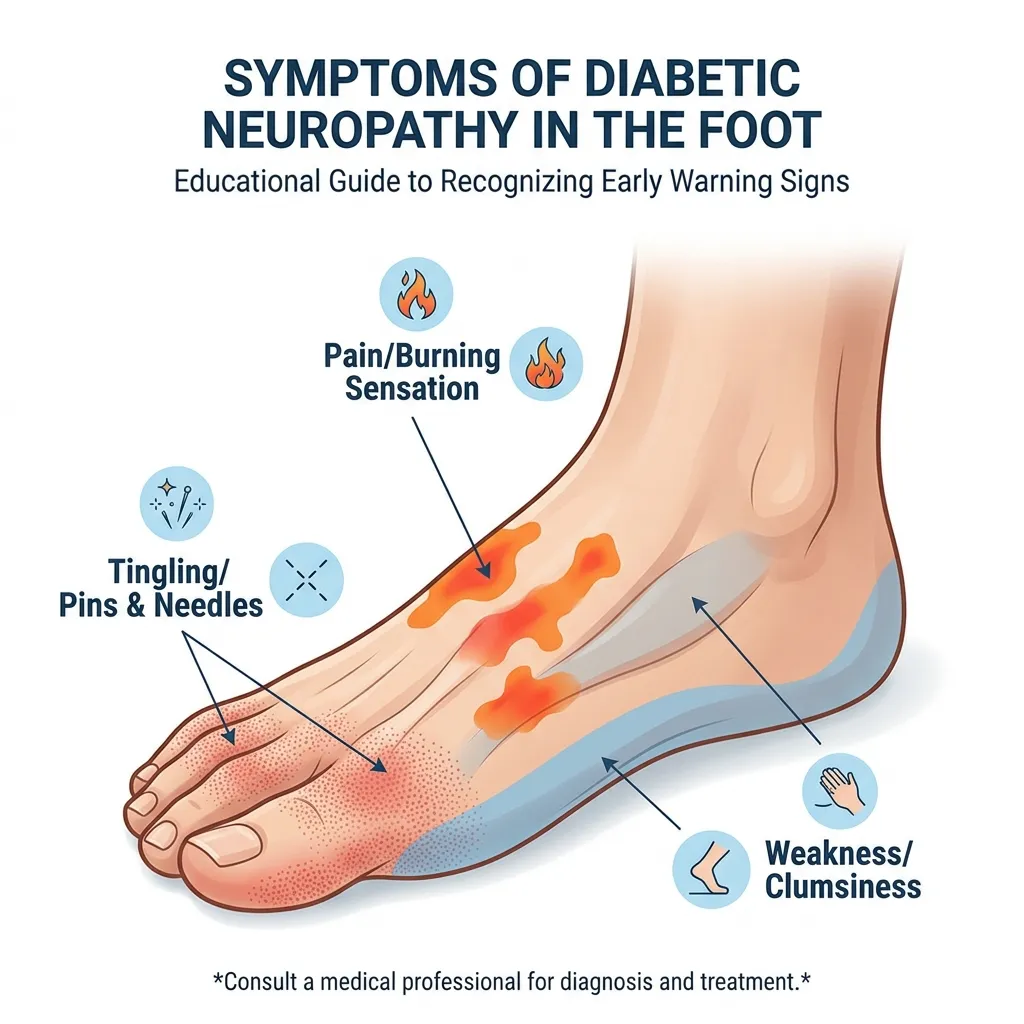
Diabetic neuropathy is the most common form of peripheral neuropathy. According to the American Diabetes Association, up to 50% of people with diabetes will develop some form of neuropathy during their lifetime.
High blood sugar levels damage nerve fibers over time, particularly the small sensory nerves in the feet and lower legs. The result is a progressive loss of sensation that follows a predictable pattern—starting at the toes and working upward.
Diabetic neuropathy symptoms in the feet include:
- Numbness or reduced ability to feel pain and temperature
- Burning or tingling that is often worse at night
- Sharp cramps in the feet or legs
- Extreme sensitivity to touch
- Changes in foot shape due to muscle weakness (Charcot foot)
- Slow-healing sores or ulcers
The loss of protective sensation in the feet is why diabetic neuropathy carries such serious risks. Without the ability to feel pain, minor injuries can escalate quickly. Diabetic foot complications are a leading cause of non-traumatic lower limb amputations worldwide.
For people with diabetes, regular foot examinations and blood sugar management are critical tools in slowing nerve damage progression.
Neuropathy Symptoms in the Legs and Feet: When the Damage Spreads
As neuropathy progresses, symptoms extend beyond the feet into the lower legs. This upward spread is a hallmark of length-dependent neuropathy, where the longest nerves deteriorate first.
Symptoms in the legs may include:
- Weakness in the lower limbs, making it difficult to lift the foot properly (a condition called foot drop)
- A loss of balance or coordination when walking, particularly in the dark when visual cues are absent
- Restless, uncomfortable sensations in the legs that worsen at rest
- Muscle wasting in the calves and feet
The balance problems associated with leg neuropathy significantly increase fall risk, particularly in older adults. A study published in the journal Diabetes Care found that people with diabetic peripheral neuropathy are more than twice as likely to fall compared to those without the condition.
Peripheral Nerve Damage Warning Signs You Shouldn’t Ignore
Some symptoms are more urgent than others. The following warning signs suggest significant nerve damage and warrant prompt medical evaluation:
- Sudden, severe weakness in an arm or leg
- Rapid onset of numbness or tingling after a period of no symptoms
- Visible muscle wasting in the hands, forearms, or legs
- Loss of bladder or bowel control (this may indicate damage to autonomic nerves)
- Difficulty swallowing or breathing in rare cases involving cranial or respiratory nerves
- Burning pain that is severely disrupting sleep or daily function
While gradual neuropathy progression is common, sudden changes in symptoms should never be attributed to the normal course of the condition without medical assessment. Some causes of rapid nerve damage—such as Guillain-Barré syndrome or vasculitic neuropathy—require immediate treatment.
Causes of Numbness and Tingling: Why Do Nerves Get Damaged in the First Place?
Nerve damage can result from a wide range of underlying causes. Identifying the root cause is essential because treatment strategies differ significantly depending on the origin.
Diabetes is the most prevalent cause, but other significant contributors include:
- Vitamin deficiencies, particularly B12, B1, and B6. Vitamin B12 deficiency is one of the most frequently overlooked causes of peripheral neuropathy, especially in older adults and those on long-term metformin therapy.
- Alcohol use disorder, which damages nerves both directly and through nutritional deficiencies
- Chemotherapy drugs, especially platinum-based agents and taxanes, which are notorious for causing peripheral neuropathy as a side effect
- Autoimmune diseases such as lupus, rheumatoid arthritis, and Sjögren’s syndrome
- Infections, including Lyme disease, HIV, and shingles (herpes zoster)
- Hypothyroidism, which can cause nerve compression and metabolic changes affecting nerve function
- Kidney disease, as uremic toxins can damage peripheral nerves
- Inherited conditions like Charcot-Marie-Tooth disease, a genetic disorder affecting the peripheral nerves
- Physical trauma or compression, such as carpal tunnel syndrome or a herniated disc pressing on a nerve root
In roughly 30% of cases, no underlying cause can be identified despite thorough investigation—a condition referred to as idiopathic neuropathy.
Autonomic Neuropathy Symptoms in Adults: The Hidden Side of Nerve Damage
While sensory and motor symptoms get the most attention, autonomic neuropathy—damage to the nerves controlling involuntary functions—can be equally debilitating and is often overlooked.
Autonomic nerves regulate processes you don’t consciously control: heart rate, blood pressure, digestion, sweating, sexual function, and bladder control. When these nerves are damaged, the consequences affect virtually every organ system.
Common autonomic neuropathy symptoms in adults include:
- Orthostatic hypotension: a sudden drop in blood pressure upon standing, causing dizziness or fainting
- Gastroparesis: delayed stomach emptying, leading to nausea, vomiting, bloating, and unpredictable blood sugar levels in diabetics
- Bowel dysfunction: alternating constipation and diarrhea, or fecal incontinence
- Bladder dysfunction: difficulty emptying the bladder fully, urinary retention, or urinary incontinence
- Abnormal sweating: either excessive sweating (hyperhidrosis) or a complete inability to sweat (anhidrosis), which can impair the body’s ability to regulate temperature
- Sexual dysfunction: erectile dysfunction in men, and reduced vaginal lubrication and arousal in women
- Resting tachycardia: an abnormally fast heart rate even at rest, or an inability of the heart rate to adjust appropriately to activity levels
Cardiac autonomic neuropathy, in particular, is associated with increased risk of silent heart attacks—heart attacks that occur without typical chest pain due to damaged cardiac nerves. According to research published in Diabetes Care, cardiac autonomic neuropathy is an independent predictor of cardiovascular mortality in people with diabetes.
Autonomic neuropathy is frequently underdiagnosed because its symptoms overlap with many other conditions and because patients and clinicians often focus on the more obvious sensory symptoms first.
When to See a Doctor About Neuropathy Symptoms
The timing of medical evaluation matters. Peripheral neuropathy is generally more manageable when identified early, before significant nerve fiber loss has occurred.
Consider seeing a doctor if you experience:
- Tingling, numbness, or burning in the hands or feet that persists for more than a few weeks
- Weakness in the limbs affecting your ability to walk or grip objects
- Pain at night that is disrupting your sleep
- Loss of balance or coordination that wasn’t present before
- Any combination of the symptoms described above, particularly if you have diabetes, a history of heavy alcohol use, or are currently undergoing chemotherapy
Diagnosis typically involves a neurological examination, blood tests to identify underlying causes, nerve conduction studies, and sometimes a skin biopsy to assess small fiber density.
Understanding Your Neuropathy Symptoms Can Change Everything
Neuropathy symptoms rarely appear all at once. They build gradually, sometimes over years, in a pattern that’s easy to normalize until the damage is significant. The tingling that seems harmless today can become persistent nerve pain tomorrow. The numbness in your feet that feels like a minor inconvenience can quietly remove your ability to detect injury.
That progression isn’t inevitable. With early identification, the right diagnosis, and appropriate treatment—whether that means better blood sugar control, nutritional supplementation, medication, or addressing an underlying condition—nerve damage can often be slowed, and in some cases reversed.
If something feels off, trust that instinct. Your nervous system is one of the most complex structures in the human body, and it’s worth listening to what it’s telling you.
Frequently Asked Questions
What are the first signs of neuropathy?
Early neuropathy signs include tingling, numbness, or “pins and needles” in the fingers or toes. These symptoms are often mild, intermittent, and may worsen over time.
Can neuropathy symptoms come and go?
Yes. In early stages, symptoms can appear and disappear. However, recurring symptoms may indicate ongoing nerve damage that can progress.
What does diabetic neuropathy feel like in the feet?
It often feels like burning, tingling, numbness, or walking on something like sand or socks. Some people also experience sharp or electric-like pain.
Is burning in the hands and feet always caused by neuropathy?
No. Burning can also be caused by other conditions, but persistent burning with numbness or tingling is commonly linked to neuropathy.
What is autonomic neuropathy?
Autonomic neuropathy affects nerves that control involuntary functions like heart rate, digestion, and bladder control, unlike peripheral neuropathy which affects sensation and movement.
Can neuropathy be reversed?
Sometimes. If caught early, especially from causes like vitamin deficiency or diabetes, symptoms can improve. Severe nerve damage is often harder to reverse.
