


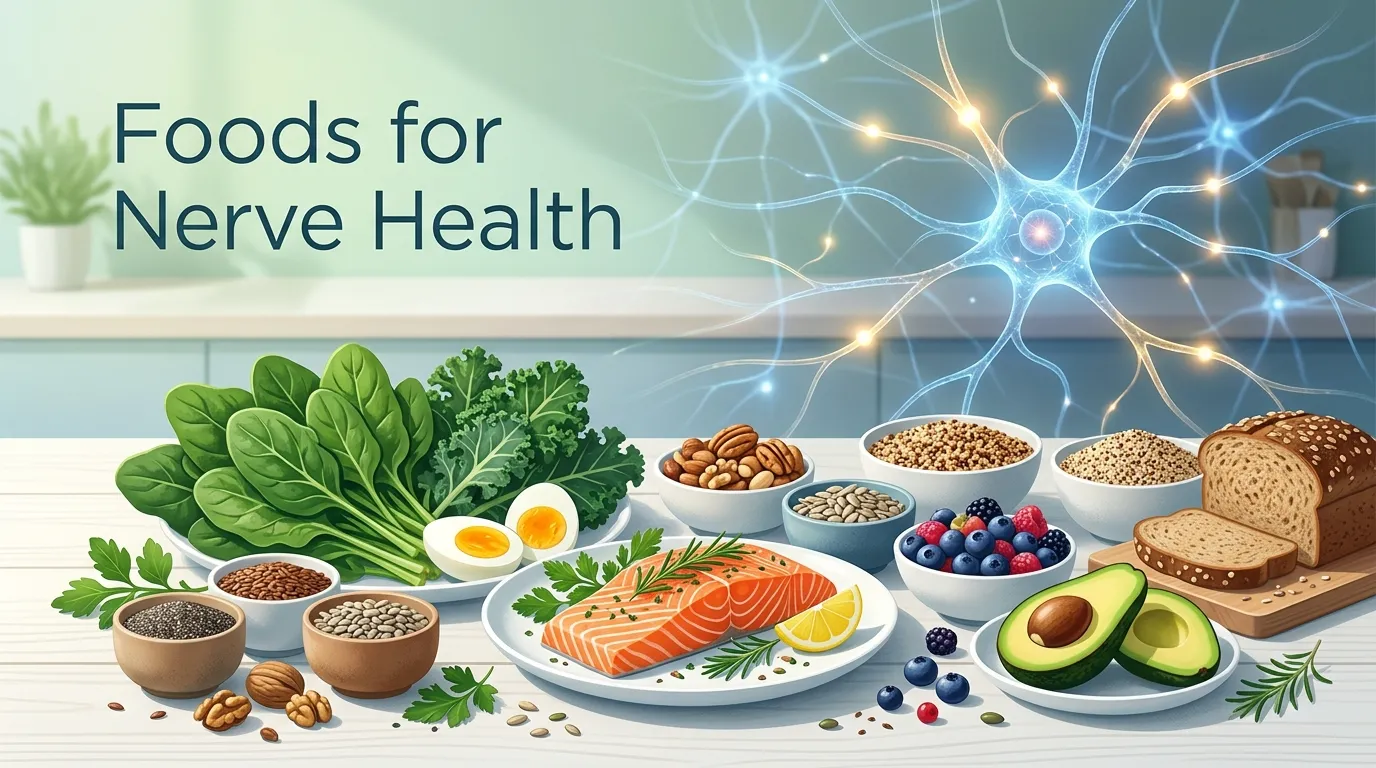
The best foods for nerve health are rich in B vitamins (especially B12), omega-3 fatty acids, magnesium, and antioxidants. Think leafy greens, fatty fish, eggs, nuts, seeds, legumes, and colorful fruits. These nutrients protect nerve fibers, reduce inflammation, and support the repair of damaged nerves.
Your nerves do a lot of quiet work. They carry signals from your brain to your muscles, help you feel a warm cup of coffee, and keep your heart beating without a second thought. When nerves are damaged or undernourished, that smooth communication breaks down—often showing up as tingling, numbness, burning pain, or weakness.
The good news? What you eat can make a real difference. Certain nutrients help protect the protective coating around your nerves, calm inflammation, and even support nerve regeneration. While food isn’t a cure for serious conditions like neuropathy, a nerve-friendly diet can ease symptoms and lower your risk of further damage.
This guide breaks down the best foods for nerve repair, the key vitamins and minerals your nerves crave, and how to build a diet that keeps your nervous system running smoothly. Let’s dig in.
How Does Food Affect Nerve Health?
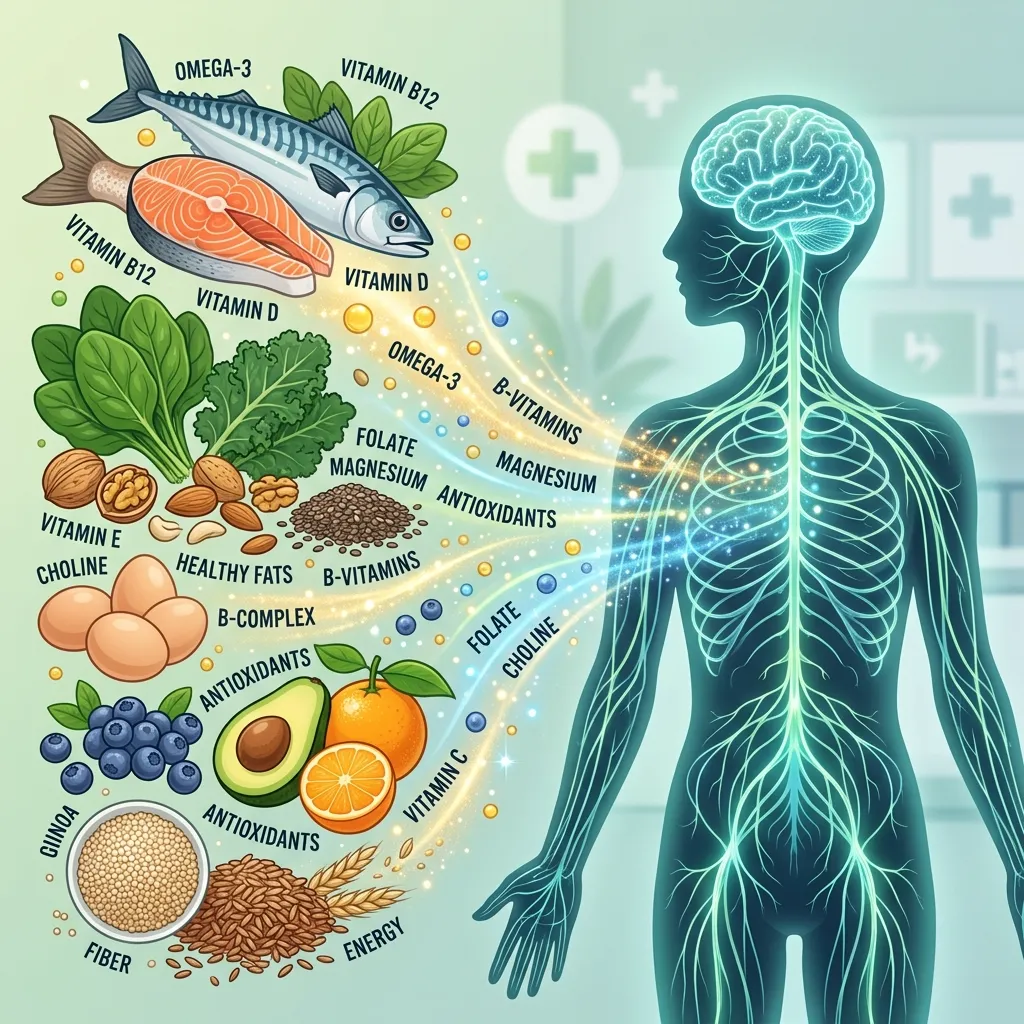
Nerves rely on a steady supply of specific nutrients to function and heal. B vitamins help produce the myelin sheath—the fatty layer that insulates nerve fibers and speeds up signals. Omega-3 fatty acids reduce inflammation and support nerve membrane structure. Antioxidants fight the oxidative stress that damages nerve cells over time.
When your diet lacks these nutrients, nerves become more vulnerable. A vitamin B12 deficiency, for example, is a well-known cause of peripheral neuropathy. Diets high in sugar and processed foods can also worsen nerve damage by driving inflammation and raising blood sugar—a major concern for people with diabetes.
So the foods on your plate either protect your nerves or put them at risk. Here’s what to prioritize.
What Are the Best Foods for Nerve Repair?
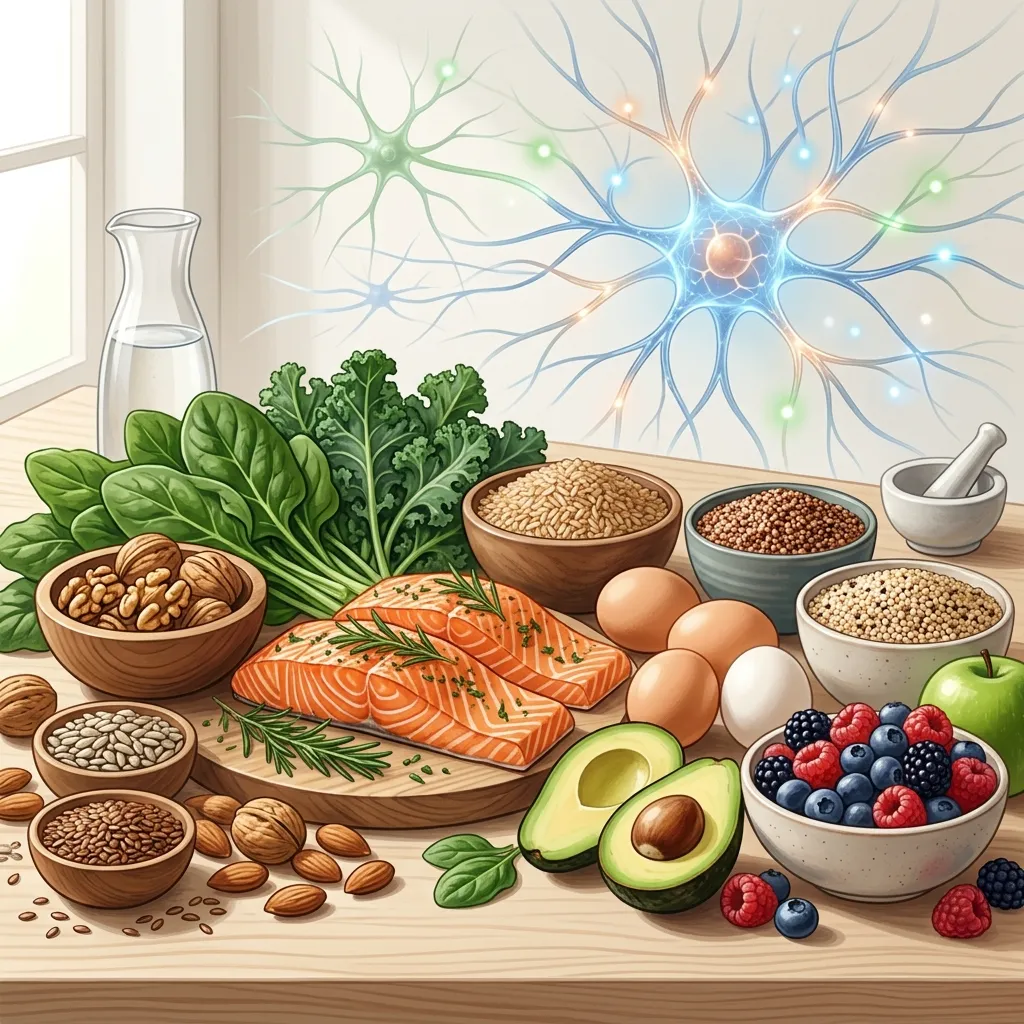
No single food repairs nerves overnight. But a consistent diet packed with the right nutrients gives your body the building blocks it needs to heal. Below are the top categories of nerve healing foods, grouped by the nutrients that make them effective.
Foods Rich in Vitamin B12 for Nerves
Vitamin B12 is arguably the most important nutrient for nerve health. It supports myelin production and helps nerves transmit signals properly. Low B12 is one of the most common—and most overlooked—causes of nerve damage, especially in older adults and people following plant-based diets.
Top sources of vitamin B12 include:
- Shellfish (clams, mussels, and oysters are exceptionally rich)
- Fish like salmon, trout, and tuna
- Lean beef and liver
- Eggs
- Dairy products such as milk, yogurt, and cheese
- Fortified foods like nutritional yeast and plant-based milks (a key option for vegans and vegetarians)
If you eat little or no animal products, talk to your doctor about a B12 supplement. Deficiency can cause permanent nerve damage if left untreated.
Foods Loaded with Other B Vitamins
B12 gets the spotlight, but your nerves need the whole B-vitamin family. Vitamin B1 (thiamine), B6 (pyridoxine), and B9 (folate) all play roles in nerve function and repair.
Good sources include:
- Whole grains like brown rice, oats, and quinoa (rich in B1)
- Poultry, chickpeas, and bananas (high in B6)
- Leafy greens such as spinach and kale (packed with folate)
- Legumes including lentils and black beans
A quick caution: too much B6 from supplements can actually harm nerves. Stick to food sources unless your doctor recommends otherwise.
Omega-3 Rich Foods for Nerve Regeneration
Omega-3 fatty acids are some of the most powerful nutrients for nerve regeneration. They form part of every nerve cell membrane and help reduce the inflammation that drives nerve pain. Research suggests omega-3s may support the growth of new nerve cells and protect against damage.
Load up on these omega-3 sources:
- Fatty fish like salmon, mackerel, sardines, and herring
- Walnuts
- Flaxseeds and chia seeds
- Hemp seeds
- Algae oil (a great plant-based option)
Aim for at least two servings of fatty fish per week, or add a daily spoonful of ground flaxseed to your meals.
Magnesium-Rich Foods for Nerve Health
Magnesium helps regulate nerve signals and muscle function. When magnesium runs low, nerves can become overactive—leading to cramps, twitching, and heightened pain sensitivity. Many people don’t get enough of this mineral.
Boost your magnesium with:
- Dark leafy greens like spinach and Swiss chard
- Pumpkin seeds and almonds
- Black beans and edamame
- Avocados
- Dark chocolate (70% cocoa or higher—a delicious bonus)
Antioxidant-Rich Fruits and Vegetables
Antioxidants protect nerve cells from oxidative stress, a process that speeds up nerve damage. Vitamin E, vitamin C, and plant compounds called polyphenols are especially helpful.
Fill your plate with:
- Berries (blueberries, strawberries, blackberries)
- Citrus fruits like oranges and grapefruit
- Bell peppers
- Sweet potatoes
- Sunflower seeds and almonds (great sources of vitamin E)
- Green tea (rich in protective polyphenols)
What Are the Best Anti-Inflammatory Foods for Nerve Pain?

Chronic inflammation is a key driver of nerve pain. Eating more anti-inflammatory foods can help calm that response and ease discomfort. The Mediterranean diet—built around vegetables, fish, olive oil, and whole grains—is one of the most studied anti-inflammatory eating patterns.
Focus on these anti-inflammatory choices:
- Fatty fish (omega-3s do double duty here)
- Olive oil, especially extra-virgin
- Turmeric, which contains the anti-inflammatory compound curcumin
- Ginger
- Leafy greens and cruciferous vegetables like broccoli and Brussels sprouts
- Berries and cherries
Pairing turmeric with black pepper boosts curcumin absorption significantly—a simple trick to get more benefit.
Which Vitamins and Nutrients Matter Most for Nerve Function?
If you want to build a nerve-friendly diet, these are the nutrients to keep front and center:
|
Nutrient |
Why It Helps |
Top Food Sources |
|---|---|---|
|
Vitamin B12 |
Builds myelin, supports signal transmission |
Shellfish, fish, eggs, dairy |
|
Vitamin B1, B6, B9 |
Supports nerve function and repair |
Whole grains, poultry, leafy greens |
|
Omega-3s |
Reduce inflammation, aid regeneration |
Salmon, walnuts, flaxseeds |
|
Magnesium |
Regulates nerve signals |
Spinach, pumpkin seeds, avocado |
|
Vitamin E |
Protects nerves from oxidative damage |
Almonds, sunflower seeds |
|
Vitamin C |
Supports nerve repair and antioxidant defense |
Citrus, bell peppers, berries |
|
Vitamin D |
Linked to nerve health and pain reduction |
Fatty fish, fortified foods, sunlight |
Vitamin D deserves a special mention. Low vitamin D levels have been linked to nerve pain and neuropathy. Since it’s hard to get enough from food alone, safe sun exposure and supplements may help—check with your doctor first.
What Foods Should You Avoid to Reduce Nerve Damage?
Just as some foods support your nerves, others can work against them. To reduce nerve damage and protect nerve function, cut back on:
- Added sugars and refined carbs, which spike blood sugar and fuel inflammation
- Heavily processed foods loaded with additives and unhealthy fats
- Excess alcohol, a direct cause of nerve damage and B-vitamin depletion
- Trans fats found in many fried and packaged foods
- Too much salt, which can affect blood flow to nerves
For people with diabetes, keeping blood sugar steady is one of the most powerful ways to prevent diabetic neuropathy.
How to Build a Diet for Healthy Nerves
Knowing the right foods is one thing—putting them together is another. Here’s a simple framework for a nerve-supporting diet:
- Make half your plate vegetables and fruit. Aim for a rainbow of colors to maximize antioxidants.
- Choose fatty fish twice a week. Salmon, sardines, and mackerel deliver omega-3s and B12.
- Snack on nuts and seeds. Walnuts, almonds, and pumpkin seeds offer magnesium, vitamin E, and healthy fats.
- Swap refined grains for whole grains. Brown rice, oats, and quinoa add B vitamins and steady energy.
- Cook with anti-inflammatory ingredients. Olive oil, turmeric, and ginger make easy, flavorful additions.
- Limit sugar, alcohol, and processed foods. These are the biggest dietary threats to nerve health.
Consistency matters more than perfection. Small, steady changes add up to real protection for your nervous system over time.
A Final Word on Eating for Nerve Health
Your nerves thrive on the same foods that support overall health—colorful produce, fatty fish, whole grains, nuts, and seeds. By focusing on B vitamins, omega-3s, magnesium, and antioxidants, you give your body the tools it needs to protect, support, and even repair nerve tissue.
That said, diet is one piece of the puzzle. If you’re experiencing numbness, tingling, burning, or weakness, see a healthcare provider. These symptoms can signal underlying conditions that need proper diagnosis and treatment. A nerve-friendly diet works best alongside medical care, not in place of it.
Start with one or two changes this week—maybe a salmon dinner or a handful of walnuts as an afternoon snack. Your nerves will thank you.
Frequently Asked Questions
What is the single best food for nerve health?
There’s no single “best” food, but fatty fish like salmon stands out. It delivers omega-3 fatty acids, vitamin B12, and vitamin D—three nutrients that protect and repair nerves. Eating it twice a week is a simple, high-impact habit.
Can foods actually repair damaged nerves?
Food alone won’t fully reverse serious nerve damage, but the right nutrients support your body’s natural repair processes. B vitamins, omega-3s, and antioxidants help build myelin, reduce inflammation, and protect nerve cells, which can ease symptoms and prevent further damage.
What vitamin deficiency causes nerve damage?
Vitamin B12 deficiency is one of the most common causes of nerve damage, leading to symptoms like tingling and numbness. Deficiencies in vitamins B1, B6, and E can also harm nerves. If you suspect a deficiency, ask your doctor for a blood test.
How long does it take for diet to improve nerve health?
It varies. Some people notice less nerve pain within a few weeks of eating better, while nerve repair itself can take months. Consistency is key—the longer you maintain a nerve-friendly diet, the better your results.
Are there foods that make nerve pain worse?
Yes. Added sugars, refined carbs, excess alcohol, trans fats, and heavily processed foods can increase inflammation and worsen nerve pain. Cutting back on these is just as important as eating more nerve-supporting foods.
What are the best foods for nerve health?
The best foods for nerve health include fatty fish, eggs, leafy greens, nuts, seeds, berries, legumes, and whole grains. These foods provide essential nutrients that help protect and support healthy nerve function.
How do foods for nerve health help reduce nerve pain?
Foods for nerve health contain anti-inflammatory compounds, antioxidants, and healthy fats that may help reduce inflammation and support nerve repair, which can ease nerve pain over time.
Can foods for nerve health improve nerve regeneration?
Yes, foods for nerve health rich in omega-3 fatty acids, B vitamins, and antioxidants may support the body’s natural nerve regeneration process and help maintain healthy nerve cells.
Are foods for nerve health beneficial for people with neuropathy?
Foods for nerve health can be beneficial for people with neuropathy because they provide nutrients that support nerve function, reduce inflammation, and help protect against further nerve damage.
Which fruits are considered the best foods for nerve health?
Berries, oranges, grapefruit, avocados, and bananas are among the best foods for nerve health because they are packed with antioxidants, vitamins, and minerals that support the nervous system.
What foods for nerve health are high in magnesium?
Some of the top foods for nerve health that are high in magnesium include spinach, pumpkin seeds, almonds, black beans, avocados, and dark chocolate.
Can foods for nerve health help prevent nerve damage?
A balanced diet that includes foods for nerve health may help lower the risk of nerve damage by providing nutrients that support nerve protection and reduce oxidative stress.
How often should I eat foods for nerve health?
For the best results, foods for nerve health should be included regularly in your daily diet as part of a balanced eating plan rich in whole foods and healthy fats.
What foods should be avoided while focusing on foods for nerve health?
When prioritizing foods for nerve health, it’s best to limit processed foods, excess sugar, alcohol, trans fats, and refined carbohydrates that can contribute to inflammation and nerve damage.
Do foods for nerve health support overall nervous system function?
Yes, foods for nerve health support overall nervous system function by providing essential vitamins, minerals, antioxidants, and healthy fats needed for proper nerve communication and protection.
